
培育钻石、莫桑石与培育彩宝。可定制珠宝工厂。

购物车

您的购物车还没有商品!

Lab-Grown Diamonds: Quality, Price & Buying Guide

Lab-Grown Diamonds: Quality, Price & Buying Guide

Oct 02, 2026

Lab-Grown Diamonds: Quality, Price & Buying Guide

Shopping for a diamond today means having more choices than ever. Alongside natural diamonds, laboratory-grown diamonds have become a popular option for engagement rings, wedding jewelry, and everyday fine jewelry.

But choosing a diamond is about more than finding the lowest price. Buyers want to know how lab-grown diamonds are made, how quality is evaluated, what certification means, and whether the stone they are considering is right for their budget.

This guide covers the essential points to know before buying.

What Is a Lab-Grown Diamond?

A lab-grown diamond is a diamond produced in a controlled laboratory environment rather than formed naturally underground.

Modern production commonly uses two methods: High Pressure High Temperature (HPHT) and Chemical Vapor Deposition (CVD). These technologies create conditions that allow diamond crystals to grow.

A lab-grown diamond should not be confused with a diamond simulant. Simulants such as cubic zirconia are different materials that imitate the appearance of diamond. Laboratory-grown diamonds are diamond material, but their origin is different from that of mined diamonds.

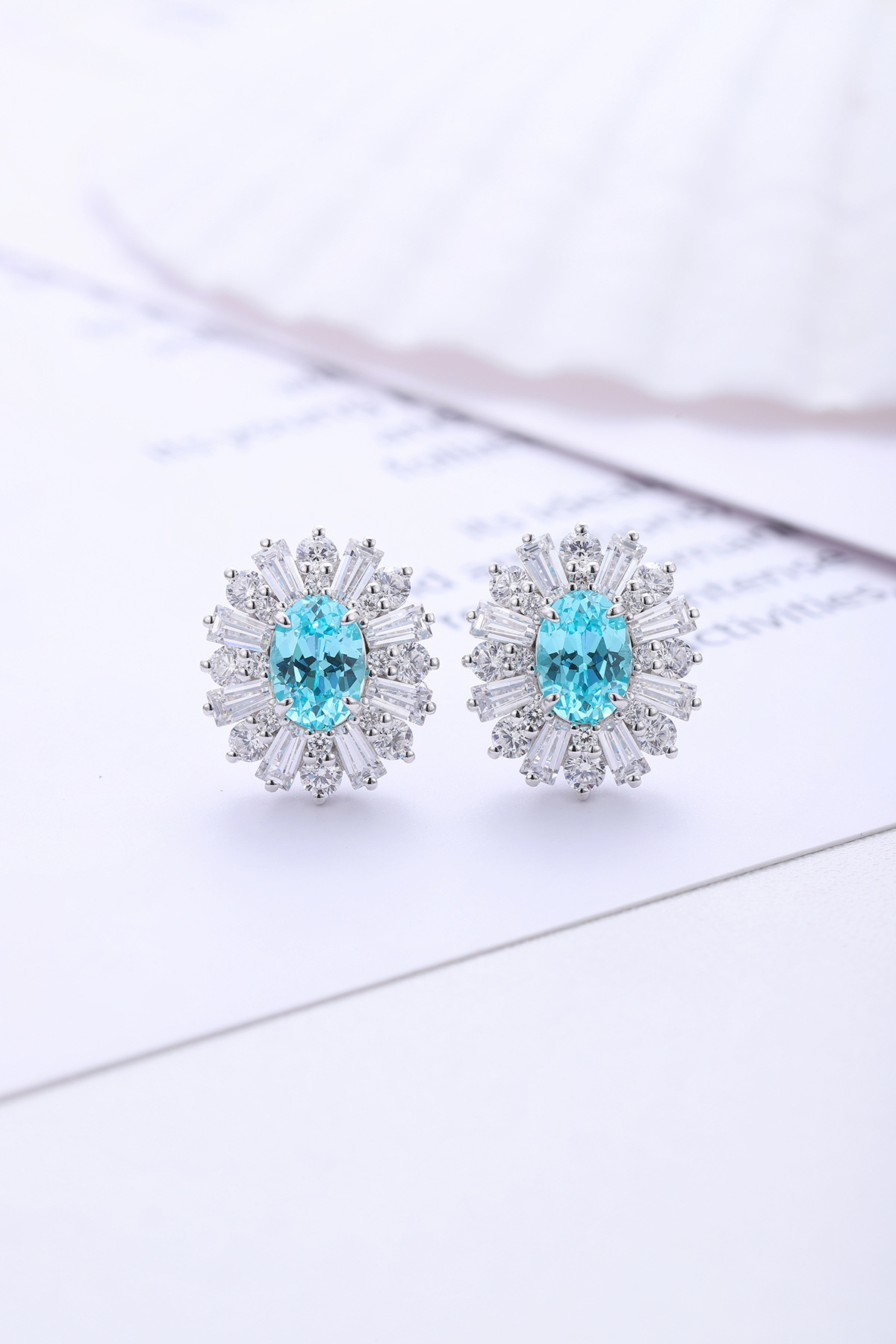
培育帕拉伊巴耳环2.jpg

How Is Lab-Grown Diamond Quality Measured?

When comparing diamonds, shoppers often encounter the familiar 4Cs: Cut, Color, Clarity, and Carat Weight.

Cut

Cut influences how a diamond interacts with light. A well-proportioned diamond can appear bright and lively, making cut an important factor when comparing stones.

Color

Color refers to the amount of visible body color in a diamond according to the grading system being used.

Clarity

Clarity describes internal and surface characteristics. A higher clarity grade can be desirable, but the practical difference may depend on the size and visibility of individual characteristics.

Carat Weight

Carat measures weight rather than simply visual size. Two diamonds with the same carat weight can have different dimensions and proportions.

This is why comparing the complete specifications is more useful than choosing a diamond based on carat weight alone.

Does a Lab-Grown Diamond Need a Grading Report?

A grading report can provide useful independent information about a diamond's characteristics.

Depending on the laboratory, the report may identify the stone as laboratory-grown and provide information about weight, color, clarity, measurements, proportions, growth method, or treatments.

Not all grading reports use exactly the same terminology or grading format. For that reason, buyers should read the actual report rather than comparing a single grade across different laboratories without understanding the system behind it.

Before purchasing, verify the report number and make sure the information matches the diamond being offered.
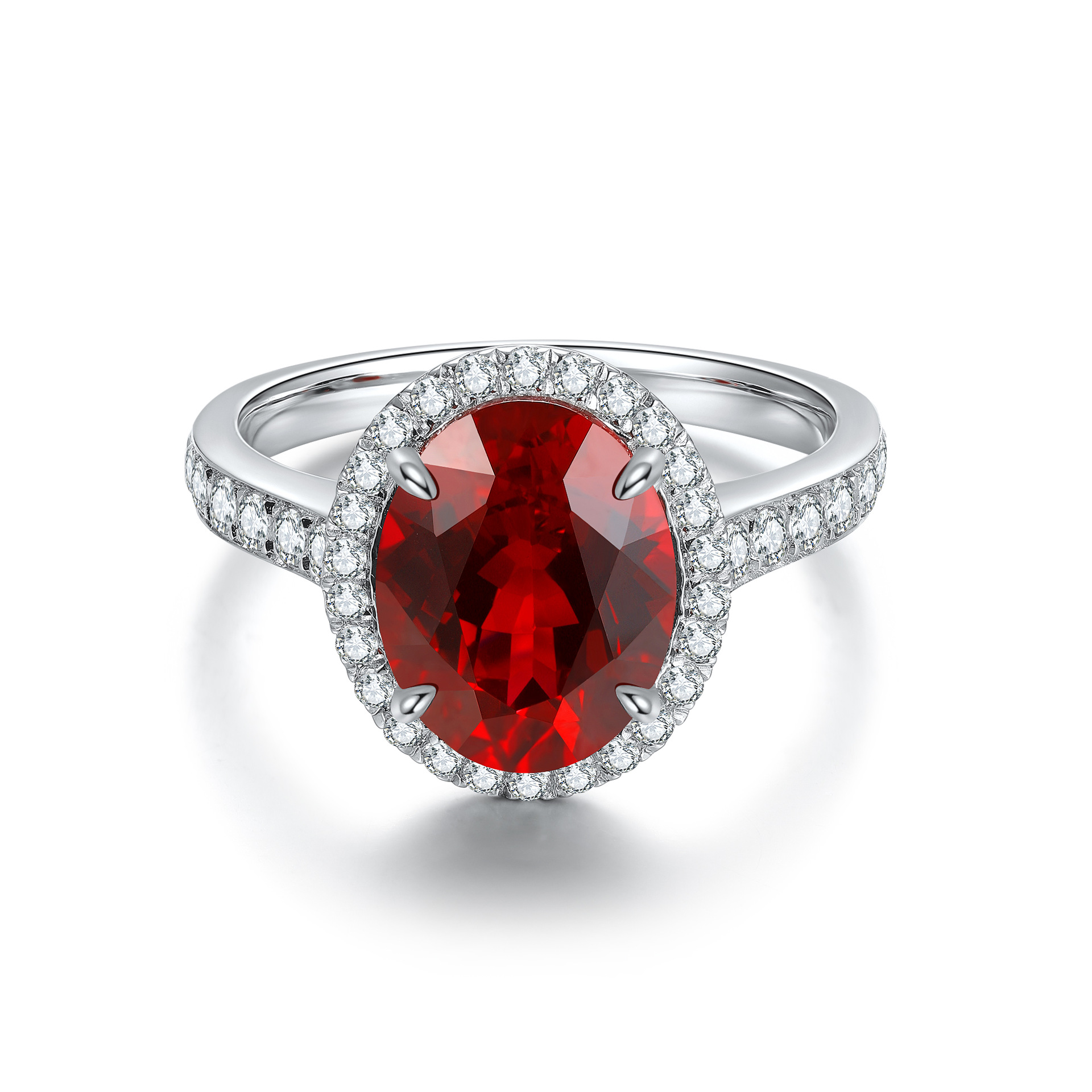
培育红宝石戒指2.jpg

What Determines Lab-Grown Diamond Prices?

There is no single standard price for a lab-grown diamond.

Retail pricing can vary according to:

  • Carat weight

  • Diamond shape

  • Cut quality

  • Color

  • Clarity

  • Measurements

  • Grading report

  • Retailer

  • Market conditions

Lab-grown diamonds are generally offered at lower retail prices than comparable natural diamonds, but the exact difference varies.

A smart comparison means looking at diamonds with similar specifications rather than comparing advertisements based only on the headline price.

For example, a lower-priced diamond may have different color, clarity, proportions, or documentation than another stone with the same carat weight.

What Should You Look for When Buying Online?

Online diamond shopping can be convenient, but product information matters.

Before placing an order, check:

1. Origin
Make sure the listing clearly states whether the diamond is laboratory-grown or natural.

2. Grading report
Check the issuing laboratory and report number.

3. Complete specifications
Review the diamond's shape, carat weight, color, clarity, measurements, and other available details.

4. Product images and videos
Use them to understand the diamond's appearance, while remembering that screens and lighting can affect how a stone looks.

5. Return policy
Know how long you have to return or exchange the item.

6. Total cost
Check whether the listed price includes the setting, shipping, taxes, warranty, or other charges.

7. Seller information
Look for clear contact information, policies, and transparent product descriptions.

These details can help turn an online diamond search into a more informed purchasing decision.

Is a Lab-Grown Diamond Right for an Engagement Ring?

That depends on your priorities.

A lab-grown diamond may appeal to buyers who want to allocate more of their budget toward diamond size or specifications. Other shoppers may place greater importance on the geological origin and traditional story associated with a natural diamond.

Neither preference needs to be hidden behind marketing language.

The most useful approach is to decide what matters to you first, then compare actual diamonds that meet those requirements.

Final Thoughts

Buying a lab-grown diamond does not have to be complicated.

Start with your budget. Decide which shape and style you prefer. Compare the relevant quality characteristics, review the grading report, and understand exactly what the seller is offering.

Most importantly, compare the complete product rather than a single number.

A thoughtful purchase is not necessarily the biggest diamond or the lowest advertised price. It is a diamond whose origin, characteristics, documentation, design, and overall cost make sense for you.

If you are ready to compare options, explore certified lab-grown diamonds and review each stone's specifications before making your final choice.

Frequently Asked Questions

Are lab-grown diamonds actual diamonds?
Laboratory-grown diamonds are diamond material produced through controlled technology. They are distinct from diamond simulants, which use different materials.

Are lab-grown diamonds cheaper than natural diamonds?
They are generally offered at lower retail prices than comparable natural diamonds, although pricing varies by specifications, retailer, certification, and market conditions.

Do lab-grown diamonds have grading reports?
Many are accompanied by laboratory grading reports that document origin and other characteristics. Buyers should review the specific report provided with the stone.

What is the most important factor when buying a lab-grown diamond?
There is no single factor for every buyer. Budget, cut, color, clarity, carat weight, shape, certification, appearance, and seller policies can all matter.

Can I buy a lab-grown diamond online?
Yes. Online shopping can offer a wide selection, but check the grading report, product details, return policy, total price, and seller information before purchasing.



We use cookie to improve your online experience. By continuing to browse this website, you agree to our use of cookie.

Cookies

Please read our Terms and Conditions and this Policy before accessing or using our Services. If you cannot agree with this Policy or the Terms and Conditions, please do not access or use our Services. If you are located in a jurisdiction outside the European Economic Area, by using our Services, you accept the Terms and Conditions and accept our privacy practices described in this Policy.
We may modify this Policy at any time, without prior notice, and changes may apply to any Personal Information we already hold about you, as well as any new Personal Information collected after the Policy is modified. If we make changes, we will notify you by revising the date at the top of this Policy. We will provide you with advanced notice if we make any material changes to how we collect, use or disclose your Personal Information that impact your rights under this Policy. If you are located in a jurisdiction other than the European Economic Area, the United Kingdom or Switzerland (collectively “European Countries”), your continued access or use of our Services after receiving the notice of changes, constitutes your acknowledgement that you accept the updated Policy. In addition, we may provide you with real time disclosures or additional information about the Personal Information handling practices of specific parts of our Services. Such notices may supplement this Policy or provide you with additional choices about how we process your Personal Information.


Cookies

Cookies are small text files stored on your device when you access most Websites on the internet or open certain emails. Among other things, Cookies allow a Website to recognize your device and remember if you've been to the Website before. Examples of information collected by Cookies include your browser type and the address of the Website from which you arrived at our Website as well as IP address and clickstream behavior (that is the pages you view and the links you click).We use the term cookie to refer to Cookies and technologies that perform a similar function to Cookies (e.g., tags, pixels, web beacons, etc.). Cookies can be read by the originating Website on each subsequent visit and by any other Website that recognizes the cookie. The Website uses Cookies in order to make the Website easier to use, to support a better user experience, including the provision of information and functionality to you, as well as to provide us with information about how the Website is used so that we can make sure it is as up to date, relevant, and error free as we can. Cookies on the Website We use Cookies to personalize your experience when you visit the Site, uniquely identify your computer for security purposes, and enable us and our third-party service providers to serve ads on our behalf across the internet.

We classify Cookies in the following categories:
 ●  Strictly Necessary Cookies
 ●  Performance Cookies
 ●  Functional Cookies
 ●  Targeting Cookies


Cookie List
A cookie is a small piece of data (text file) that a website – when visited by a user – asks your browser to store on your device in order to remember information about you, such as your language preference or login information. Those cookies are set by us and called first-party cookies. We also use third-party cookies – which are cookies from a domain different than the domain of the website you are visiting – for our advertising and marketing efforts. More specifically, we use cookies and other tracking technologies for the following purposes:

Strictly Necessary Cookies
These cookies are necessary for the website to function and cannot be switched off in our systems. They are usually only set in response to actions made by you which amount to a request for services, such as setting your privacy preferences, logging in or filling in forms. You can set your browser to block or alert you about these cookies, but some parts of the site will not then work. These cookies do not store any personally identifiable information.

Functional Cookies
These cookies enable the website to provide enhanced functionality and personalisation. They may be set by us or by third party providers whose services we have added to our pages. If you do not allow these cookies then some or all of these services may not function properly.

Performance Cookies
These cookies allow us to count visits and traffic sources so we can measure and improve the performance of our site. They help us to know which pages are the most and least popular and see how visitors move around the site. All information these cookies collect is aggregated and therefore anonymous. If you do not allow these cookies we will not know when you have visited our site, and will not be able to monitor its performance.

Targeting Cookies
These cookies may be set through our site by our advertising partners. They may be used by those companies to build a profile of your interests and show you relevant adverts on other sites. They do not store directly personal information, but are based on uniquely identifying your browser and internet device. If you do not allow these cookies, you will experience less targeted advertising.

How To Turn Off Cookies
You can choose to restrict or block Cookies through your browser settings at any time. Please note that certain Cookies may be set as soon as you visit the Website, but you can remove them using your browser settings. However, please be aware that restricting or blocking Cookies set on the Website may impact the functionality or performance of the Website or prevent you from using certain services provided through the Website. It will also affect our ability to update the Website to cater for user preferences and improve performance. Cookies within Mobile Applications

We only use Strictly Necessary Cookies on our mobile applications. These Cookies are critical to the functionality of our applications, so if you block or delete these Cookies you may not be able to use the application. These Cookies are not shared with any other application on your mobile device. We never use the Cookies from the mobile application to store personal information about you.

If you have questions or concerns regarding any information in this Privacy Policy, please contact us by email at . You can also contact us via our customer service at our Site.


Language ▾

