
Cart
Your shopping cart doesn't have any products yet!
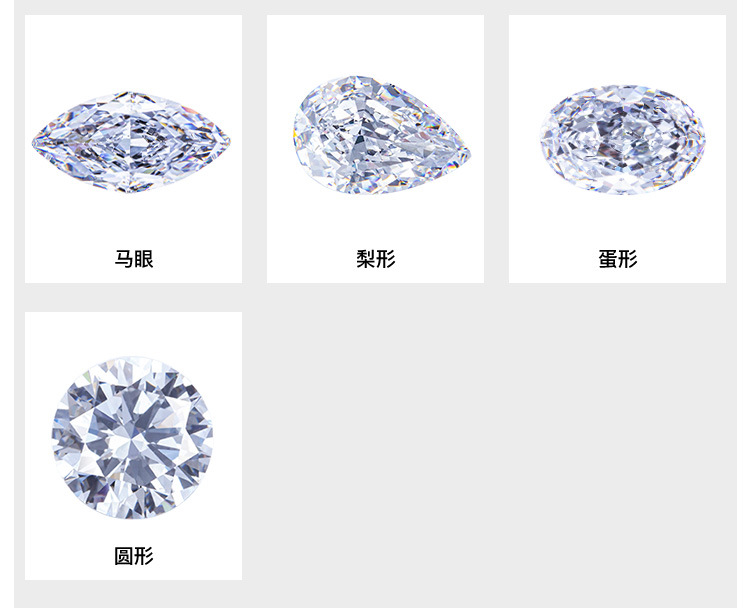
When shopping for a moissanite engagement ring, one of the first questions buyers often ask is how its size compares with a diamond.
The comparison can be confusing because moissanite carat weight and diamond carat weight are not directly interchangeable. Moissanite is less dense than diamond, so a moissanite stone with the same carat weight as a diamond will generally have different physical dimensions.
For this reason, people choosing moissanite often use diamond size equivalence or diamond equivalent weight (DEW) as a reference instead of relying only on the gemstone's actual carat weight.
Understanding the difference between moissanite carat weight vs diamond size can make it easier to select the right center stone, compare prices, and choose a size that looks proportional to the finished jewelry.
No.
Moissanite and diamond have different densities. Because moissanite is less dense, a moissanite gemstone with the same physical dimensions as a diamond generally weighs less.
This creates an important distinction between carat weight and visible size.
For example, a moissanite that visually occupies approximately the same face-up area as a one-carat diamond may weigh less than one carat.
That does not mean the moissanite is smaller.
It simply means that carat weight measures mass, while gemstone dimensions determine much of what the eye perceives as size.
This is why comparing moissanite and diamond based only on carat weight can be misleading.
You may see the term diamond equivalent weight, or DEW, used when shopping for moissanite.
DEW is generally intended to communicate the approximate diamond carat weight that a moissanite's visual size corresponds to.
For example, a seller may describe a moissanite as having a “1 carat diamond equivalent” appearance.
However, DEW should be treated as a size-reference term rather than a statement that the moissanite is actually a one-carat diamond.
The gemstone remains moissanite, and its actual weight can be different.
For more precise comparisons, buyers should look at the stone's millimeter dimensions.
When comparing gemstones, dimensions provide a more useful indication of face-up size.
For a round stone, you might see measurements such as:
6.5 mm × 6.5 mm
That tells you the approximate diameter across the top of the gemstone.
By contrast, “1 carat” only tells you about weight.
Two gemstones with similar carat weights can have different dimensions because of differences in density, cutting style, depth, and proportions.
Therefore, when comparing moissanite size vs diamond size, check:
Length
Width
Depth
Overall proportions
Shape
Face-up dimensions
This approach is more reliable than assuming that equal carat weights mean equal visible sizes.
For round stones, the following chart provides a useful general reference. Actual dimensions vary according to the individual cut and manufacturer.
| Approximate Diamond Carat Size | Typical Round Diamond Diameter | Approximate Face-Up Moissanite Reference |
|---|---|---|
| 0.25 ct | ~4.1 mm | ~4.0–4.2 mm |
| 0.50 ct | ~5.1 mm | ~5.0–5.2 mm |
| 0.75 ct | ~5.8 mm | ~5.8–6.0 mm |
| 1.00 ct | ~6.4–6.5 mm | ~6.4–6.5 mm |
| 1.25 ct | ~6.9–7.0 mm | ~6.9–7.1 mm |
| 1.50 ct | ~7.3–7.5 mm | ~7.3–7.5 mm |
| 2.00 ct | ~8.1–8.2 mm | ~8.0–8.2 mm |
| 2.50 ct | ~8.8–9.0 mm | ~8.8–9.0 mm |
| 3.00 ct | ~9.2–9.4 mm | ~9.2–9.4 mm |
These figures are approximate rather than universal specifications.
The actual appearance of a gemstone depends on its cut proportions and shape. When making a purchasing decision, the exact millimeter measurements supplied for the individual stone are more useful than a generic conversion chart.
Not necessarily.
A 1-carat moissanite and a 1-carat diamond can have different face-up dimensions.
Because moissanite is less dense, a moissanite with a particular diameter can weigh less than a diamond with the same diameter.
This is why you may encounter a moissanite described as a “1 carat equivalent” even though its actual weight is below one carat.
For consumers, the more useful question is often:
“What diamond size does this moissanite look like?”
rather than:
“Does this moissanite weigh exactly the same as a diamond?”
This distinction is particularly important when shopping online.
Suppose a listing describes a stone as a 1-carat equivalent moissanite.
That description may refer to its approximate visual size compared with a one-carat diamond rather than its actual physical weight.
The listing may separately provide:
Actual moissanite weight
Diamond equivalent weight
Length
Width
Depth
Always check which measurement the seller is providing.
For an informed purchase, millimeter dimensions should take priority when evaluating visible size.
There are two main reasons.
First, moissanite has lower density than diamond.
Second, moissanite is often marketed using visual size or diamond-equivalent terminology.
This can make the relationship between carat weight and appearance seem unusual to someone accustomed to buying diamonds.
A moissanite can therefore provide a substantial face-up appearance without having the same actual carat weight as a diamond of comparable dimensions.
For buyers who want a larger-looking center stone on a specific budget, this can be one of the attractions of moissanite.
Yes.
Cutting has a major influence on how large a gemstone appears from above.
Two moissanite stones can have similar weights but different proportions.
One may have a larger face-up area, while another may carry more of its weight in depth.
This is why moissanite cut and size should be considered together.
An overly deep stone may look smaller from the top than its weight suggests.
A well-proportioned stone can make better use of its material and present an attractive face-up size.
Absolutely.
A round stone is relatively straightforward to compare because its diameter provides a simple measurement.
Other shapes require length and width.
Oval stones often appear elongated and can create a larger-looking footprint on the finger.
When comparing an oval moissanite to a diamond, check its length-to-width ratio rather than relying on carat weight alone.
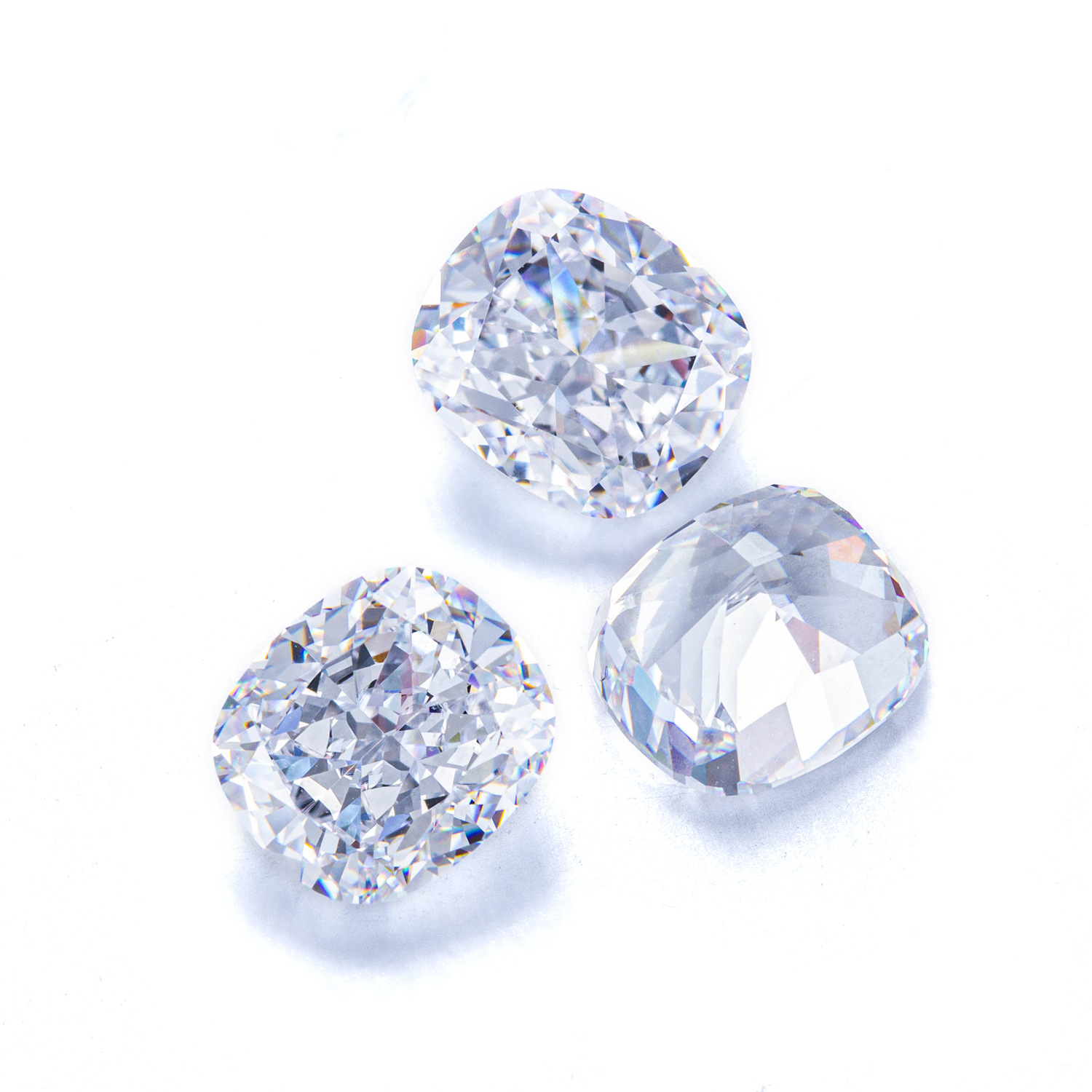
Cushion cuts can vary considerably in their proportions.
A square cushion and an elongated cushion with the same weight may have noticeably different appearances.
Pear-shaped stones combine a rounded end with a pointed tip.
Their overall dimensions and orientation can affect how large they look when mounted.
Emerald cuts use step-style facets and often have a different visual character from brilliant cuts.
Their long rectangular outline makes length and width especially important.
Heart-shaped stones are evaluated by their length, width, symmetry, and proportions.
A well-balanced heart shape can look substantial even when its actual carat weight is lower than a similarly sized diamond.
When selecting an engagement ring center stone, buyers should consider more than the gemstone's numerical size.
A large stone may attract attention, but the best size depends on:
Finger proportions
Ring design
Setting style
Metal choice
Personal preference
Lifestyle
Budget
For example, a 2-carat-equivalent moissanite in a simple solitaire setting can have a very different visual effect from the same size stone surrounded by a large halo.
The setting changes the overall scale of the ring.
The setting can either emphasize or reduce the apparent size of the center stone.
A solitaire places the center gemstone in the spotlight.
Because there are few competing elements, the stone may appear particularly prominent.
A halo adds smaller stones around the center.
This can make the overall ring look larger while visually framing the center stone.
A bezel surrounds the gemstone with metal.
It can create a clean, modern appearance but may visually reduce some of the stone's outline compared with a minimal prong setting.
Small accent stones along the band can add additional sparkle without necessarily changing the center stone's physical dimensions.
Therefore, when comparing moissanite engagement ring sizes, evaluate the complete ring design rather than the center stone alone.
Not necessarily.
Size is a matter of preference.
Some buyers prefer a substantial center stone because they enjoy a bold, noticeable appearance. Others prefer a smaller stone because it feels more understated and practical.
A larger moissanite can also produce more noticeable fire and sparkle simply because there is more gemstone surface to observe, but larger size does not automatically mean better cutting or higher quality.
A well-cut smaller stone may look more balanced and lively than a poorly proportioned larger stone.
Start with the appearance you want rather than a specific carat number.
Ask yourself:
Do I want a subtle center stone?
Consider a smaller size that complements a minimalist setting.
Do I want a noticeable but balanced center stone?
A medium-sized round, oval, or cushion may provide a strong presence without dominating the ring.
Do I want a dramatic center stone?
A larger moissanite or elongated shape can create a more substantial visual footprint.
Then check the actual dimensions.
This approach makes it easier to choose a stone based on appearance rather than simply chasing a carat-equivalent number.
For a round stone, a diamond around two carats is commonly around the low-eight-millimeter range in diameter, depending on its proportions.
A round moissanite with similar millimeter dimensions can therefore provide a broadly comparable face-up appearance while weighing less.
Rather than asking for a “2-carat moissanite,” it is often more useful to ask for a moissanite with approximately the same millimeter dimensions as a 2-carat round diamond.
This distinction becomes increasingly important as stone sizes increase.
A round three-carat diamond commonly measures in the low-nine-millimeter range across the top, although exact measurements vary.
A round moissanite with similar diameter can provide a comparable face-up footprint.
However, the visual effect may still differ because of differences in:
Cut
Faceting
Fire
Brilliance
Color
Setting
Therefore, 3-carat diamond equivalent moissanite should be understood as an approximate visual comparison, not an exact weight conversion.
It can, depending on the stones being compared.
If a moissanite and diamond have similar face-up dimensions but the moissanite weighs less, the moissanite may provide more visible size for its actual carat weight.
Additionally, moissanite's high brilliance and distinctive fire can make it particularly noticeable under jewelry-store or indoor lighting.
However, “looks bigger” is subjective.
A gemstone's apparent size depends on its dimensions, shape, cut, setting, and surrounding jewelry.
The easiest way to remember the distinction is:
Carat weight = how much the gemstone weighs.
Millimeter dimensions = how large the gemstone appears from above.
Diamond equivalent weight = a visual comparison commonly used to communicate approximate diamond size.
These three concepts should not be treated as interchangeable.
If you are shopping for a loose moissanite, prioritize the actual measurements and inspect the stone's proportions.
Different gemstone densities make this comparison unreliable.
A listing that only shows carat-equivalent weight does not provide enough information for an accurate size comparison.
A 1.5-carat oval and a 1.5-carat round do not necessarily have the same visual footprint.
A very large stone may not look balanced with the wearer's hand or the ring setting.
Poor proportions can make a gemstone appear smaller or less lively than expected.
Understanding moissanite carat weight vs diamond size becomes much easier once you separate weight from visible dimensions.
Moissanite is less dense than diamond, so a moissanite and diamond with similar physical dimensions may not have the same carat weight. This is why diamond equivalent weight is sometimes used when describing moissanite, but it should be treated as a visual reference rather than an actual weight conversion.
For shoppers, the most reliable approach is to look at millimeter measurements, shape, cut proportions, and the finished setting.
If you want a moissanite that looks similar in size to a particular diamond, start with the diamond's dimensions and find a moissanite with a comparable face-up measurement. This gives you a much clearer picture of how the finished jewelry will actually look.
In short, don't shop for moissanite by carat number alone. Shop by dimensions, cut quality, shape, and the visual presence you want. That approach makes it easier to choose a moissanite engagement ring that delivers the right balance of size, sparkle, style, and value.









