
购物车
您的购物车还没有商品!
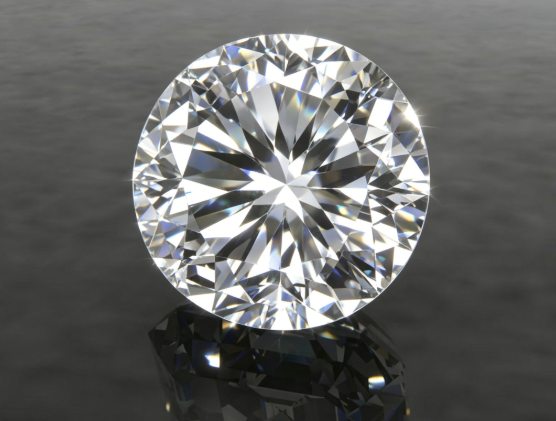
Why Wuzhou, a Small‑sized City in China, Sees Rapid Growth of Lab‑Grown Diamond Industry Wuzhou, a small city along the Xijiang River in Guangxi, is known as the World Capital of Synthetic Gemstones, producing over 70% of the world’s artificial gemstones. Its booming lab‑grown diamond industry in recent years is no accident. It results from four decades of industrial accumulation, complete supply chains, geographical advantages, supportive policies and favorable market opportunities.
1. Solid foundation in artificial gemstone processing: unique industrial roots Back in 1982, Hong Kong merchants introduced gem‑processing businesses to Wuzhou. Over the past 40‑plus years, a robust local gem‑processing ecosystem has taken shape. The city used to focus on cubic zirconia, moissanite and synthetic ruby & sapphire. It boasts tens of thousands of experienced workers skilled in gem cutting, polishing, grading and jewelry setting — core expertise required for lab‑grown diamond production. China’s lab‑grown diamond industry follows a clear division of labor: Henan dominates upstream rough diamond production, while Wuzhou excels in mid‑stream cutting, polishing, trading and custom jewelry manufacturing. Rough lab‑grown diamonds are transported from Henan to Wuzhou for cutting, polishing, grading and setting into finished jewelry. Other cities need to train workers and build processes from scratch, whereas Wuzhou simply upgrades its mature gem‑processing capacity for lab‑grown diamonds with low transformation costs.
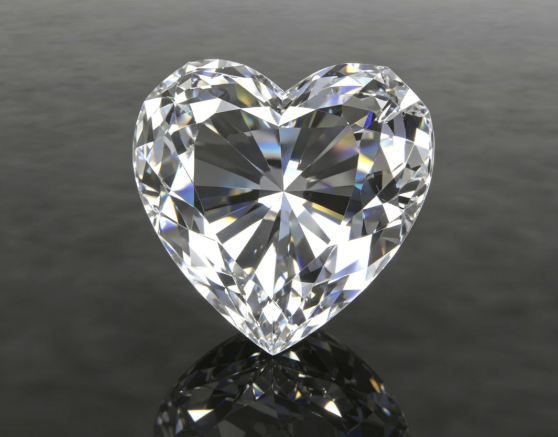
2. Complete industrial supply chain delivering high efficiency and cost advantages Wuzhou has built a closed‑loop industrial ecosystem: ‑ Equipment: Local manufacturers supply laser cutting, automatic polishing and AI sorting & inspection machinery, reducing reliance on external suppliers. ‑ Processing: All procedures including rough diamond cutting, polishing, color modification, sterling‑silver & K‑gold setting and custom jewelry can be completed locally. More than 90% of production work from rough stone to finished jewelry happens within the city. ‑ Trade: Thousands of wholesale merchants gather in the Gem City, attracting domestic and overseas buyers for on‑site procurement with well‑established offline trading channels. ‑ Intelligent manufacturing: Widespread adoption of AI visual sorting and automatic polishing equipment improves yield rates, and its capacity for large‑carat lab‑grown diamond processing keeps expanding. To put it simply: A rough lab‑grown diamond can be turned into a finished diamond ring inside one industrial park in Wuzhou. No cross‑city transit is needed, shortening lead time and lowering overall costs. 3. Geographical location & foreign‑trade strengths linking domestic and global markets Close to the Guangdong‑Hong Kong‑Macao Greater Bay Area and with convenient inland river port access, Wuzhou enjoys easy logistics links to major jewelry hubs such as Shuibei (Shenzhen) and Panyu. Supported by a comprehensive bonded zone and cross‑border e‑commerce clusters, local enterprises easily export products to Southeast Asia, Europe, America and the Middle East with fast‑growing overseas B‑end orders. Goods can be shipped to Southeast Asia within 48 hours. The industry thrives on dual‑market momentum: domestic wholesale & custom jewelry business together with large‑volume overseas exports. 4. Government‑driven industrial upgrading Wuzhou used to produce large volumes of low‑value artificial gemstones. Local authorities have prioritized lab‑grown diamonds and synthetic colored gemstones as key sectors for industrial upgrade. ‑ Build intelligent jewelry industrial parks to accommodate scattered workshops, with shared supporting facilities for electroplating and sewage treatment. ‑ Introduce research institutions and AI‑driven gem‑testing platforms to develop advanced automatic cutting & polishing technologies. ‑ Attract investment for local rough‑diamond production projects to fill gaps in upstream capacity; support local brands by organizing participation in global jewelry exhibitions. 5. Market trend fuels industry expansion Young consumers worldwide are increasingly receptive to cost‑effective lab‑grown diamonds. Surging demand for loose stones and custom diamond jewelry drives market growth. Compared with high‑priced natural diamonds, lab‑grown diamonds offer remarkable cost performance. Leveraging its processing competence and mature trade channels, Wuzhou quickly responds to market demands, with sales of large‑carat lab‑grown diamonds continuously rising, drawing capital and merchants into this sector. Existing limitations Wuzhou’s strengths lie mainly in mid‑stream cutting‑polishing, trading and custom jewelry making. Upstream HPHT and CVD rough diamond production capacity is still largely concentrated in Henan. Wuzhou is now making efforts to develop local rough‑diamond manufacturing to complete its full industrial chain. Summary: Wuzhou’s lab‑grown diamond boom did not emerge out of nowhere. Built on decades‑long artificial‑gemstone heritage, the city transfers its skilled workforce, complete supply chain and foreign‑trade advantages to the high‑end lab‑grown diamond track amid favorable market trends, creating an industrial miracle in a small Chinese city.