
购物车
您的购物车还没有商品!
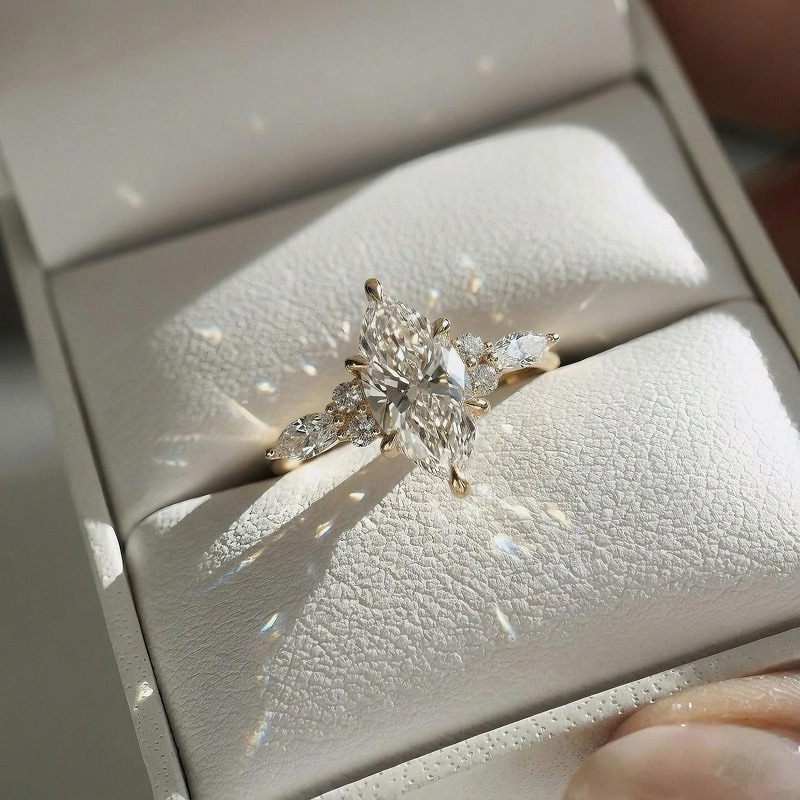
Heirloom jewelry carries meaning beyond its appearance. Whether it is a custom engagement ring, a wedding band, a family pendant, or a special anniversary gift, an heirloom piece is designed to preserve memories and remain meaningful for generations. When choosing a gemstone for this type of jewelry, many buyers compare lab grown diamonds and moissanite because both offer impressive brilliance, durability, and versatility for custom designs.
But which is better for heirloom custom jewelry, lab grown diamond or moissanite?
Both gemstones can be excellent choices for heirloom jewelry, but lab grown diamonds generally have the advantage in traditional diamond appeal, long-term market recognition, and consistency with classic family jewelry, while moissanite stands out for affordability, exceptional sparkle, and practical durability. The best option depends on your priorities, budget, design preferences, and expectations for the piece's long-term significance.
Understanding the differences between these gemstones can help you create custom jewelry that looks beautiful today and remains cherished in the future.
Before deciding which gemstone is better for heirloom custom jewelry, it is important to understand what makes each one distinctive.
A lab grown diamond is a real diamond created in a controlled laboratory environment using advanced technological processes. The two main methods are chemical vapor deposition (CVD) and high-pressure high-temperature (HPHT).
Lab grown diamonds have essentially the same chemical composition, crystal structure, and fundamental optical and physical properties as mined diamonds. They are made of crystalline carbon and are generally identifiable as diamonds through appropriate gemological testing.
They are available in various shapes, including round brilliant, oval, emerald, pear, cushion, and radiant. Buyers can also choose different carat weights, colors, and clarity characteristics to suit a custom design.
For heirloom jewelry, lab grown diamonds offer the familiar appearance and established diamond identity associated with traditional engagement rings and fine jewelry.
Moissanite is a gemstone composed of silicon carbide. Natural moissanite is extremely rare, so the moissanite used in most modern jewelry is lab-created.
It is known for its high refractive index and strong dispersion, which produce intense brilliance and colorful flashes of light. These characteristics can make moissanite appear particularly lively under direct lighting.
Moissanite is also durable enough for many everyday jewelry applications, including engagement rings, wedding bands, and custom pendants.
Because moissanite is generally less expensive than a comparable lab grown diamond, it allows buyers to create larger or more elaborate custom jewelry designs without spending as much on the center gemstone.
Durability is one of the most important factors when choosing a gemstone for heirloom jewelry. A ring intended to be passed down through a family should withstand years of wear while retaining its beauty.
Both lab grown diamonds and moissanite are highly durable, but they have different properties.
Diamond ranks 10 on the Mohs scale of mineral hardness, making it the hardest naturally occurring mineral commonly used in jewelry. Lab grown diamonds have essentially the same hardness as mined diamonds.
This makes them highly resistant to scratching during everyday wear. However, diamond is not indestructible. A sufficiently forceful impact in a vulnerable direction can cause chipping or fracture, depending on the stone's cut and internal characteristics.
A well-designed setting is therefore essential, particularly for heirloom engagement rings that may be worn frequently.
Moissanite typically ranks around 9.25 on the Mohs hardness scale. It is highly resistant to scratching and is suitable for many types of fine jewelry.
It also has good toughness for a gemstone, although it can still chip or become damaged under certain conditions. Its durability makes it a practical choice for rings and other pieces intended for regular use.
| Feature | Lab grown diamond | Moissanite |
|---|---|---|
| Mohs hardness | 10 | Approximately 9.25 |
| Scratch resistance | Excellent | Very good |
| Suitability for everyday wear | Excellent | Excellent |
| Resistance to damage from impact | High, but can chip | Good, but can chip |
| Maintenance requirements | Generally low | Generally low |
Which is better? Lab grown diamonds have the advantage in hardness and scratch resistance. However, both gemstones can last for generations with suitable care, appropriate settings, and periodic professional inspections.
The quality of the jewelry construction may ultimately matter as much as the choice between these two gemstones.
The gemstone's appearance can influence whether the finished jewelry feels classic, contemporary, or distinctive.
Lab grown diamonds provide the familiar sparkle associated with traditional diamond jewelry. Their brilliance comes from the way they reflect white light, while their dispersion creates colorful flashes.
A well-cut lab grown diamond can produce a balanced combination of brightness, contrast, and fire. This makes it especially suitable for timeless solitaire rings, three-stone designs, and elegant heirloom pendants.
Because lab grown diamonds share the essential properties of mined diamonds, they can reproduce traditional diamond jewelry styles without requiring a mined stone.
Moissanite has a higher refractive index and greater dispersion than diamond. As a result, it often displays more prominent rainbow-colored flashes, particularly under strong or direct lighting.
Some people love this vivid sparkle because it creates a distinctive, eye-catching appearance. Others prefer the more familiar balance of brilliance and fire associated with diamonds.
Neither appearance is inherently better. The right choice depends on the wearer's taste and the intended style of the heirloom piece.
For a classic family engagement ring, a lab grown diamond may better match traditional expectations. For a bold custom ring with striking visual impact, moissanite can be an excellent alternative.
Budget is often a deciding factor when designing custom jewelry. The cost of the center stone affects how much can be allocated to craftsmanship, metal quality, side stones, engraving, and other personal details.
Lab grown diamonds generally cost more than moissanite of comparable visual size, although prices vary substantially according to carat weight, cut quality, color, clarity, and retailer.
Their higher purchase price may be worthwhile for buyers who specifically want a real diamond and value its established place in traditional fine jewelry.
However, lab grown diamond prices have changed considerably as production technology and market supply have evolved. A lab grown diamond should not automatically be viewed as a financial investment or assumed to retain its original retail price.
Moissanite is generally more affordable, making it possible to allocate more of the jewelry budget to design and craftsmanship.
For example, choosing moissanite instead of a larger lab grown diamond may leave more room in the budget for a platinum setting, intricate metalwork, decorative side stones, or personalized engraving.
This can be particularly appealing for buyers who prioritize the finished piece's appearance and sentimental value over the identity of the center gemstone.
For heirloom custom jewelry, the center stone is only one part of the overall expense. A well-crafted setting, reliable construction, appropriate metal, and professional finishing all contribute to the finished piece's longevity.
A thoughtfully designed moissanite ring in a durable setting may be a better long-term purchase than a poorly constructed ring with a more expensive center stone.
Similarly, a lab grown diamond does not automatically make a piece an heirloom. The quality of the craftsmanship and the care given to the jewelry are equally important.
When people choose heirloom jewelry, they often consider not only durability and beauty but also whether the piece will retain meaning and value over time.
It is useful to distinguish between sentimental value, material value, and resale value.
Both lab grown diamonds and moissanite can become treasured family heirlooms. Their emotional significance comes from the people, occasions, and memories associated with the jewelry.
A moissanite ring given to celebrate a meaningful milestone can become just as precious to a family as a diamond ring passed down from an earlier generation.
The story behind the piece, the quality of the craftsmanship, and the intention behind the gift often matter more to family members than the gemstone's market price.
Lab grown diamonds have a recognized identity as diamonds, but their resale prices can be substantially lower than their original retail prices. Their market value is affected by production costs, supply, demand, and changing consumer preferences.
Moissanite generally has a lower resale market value than diamonds and is often purchased primarily for its appearance and affordability.
Neither gemstone should be selected on the assumption that it will appreciate financially. If resale value is a priority, research the current market and the seller's policies rather than relying on the original purchase price.
For a family that values traditional diamond jewelry, a lab grown diamond may have greater symbolic appeal because it is a genuine diamond.
For a family that values design, craftsmanship, and personal meaning, moissanite may be equally appropriate.
Both can be incorporated into custom jewelry intended to be passed down, and neither guarantees future resale value.
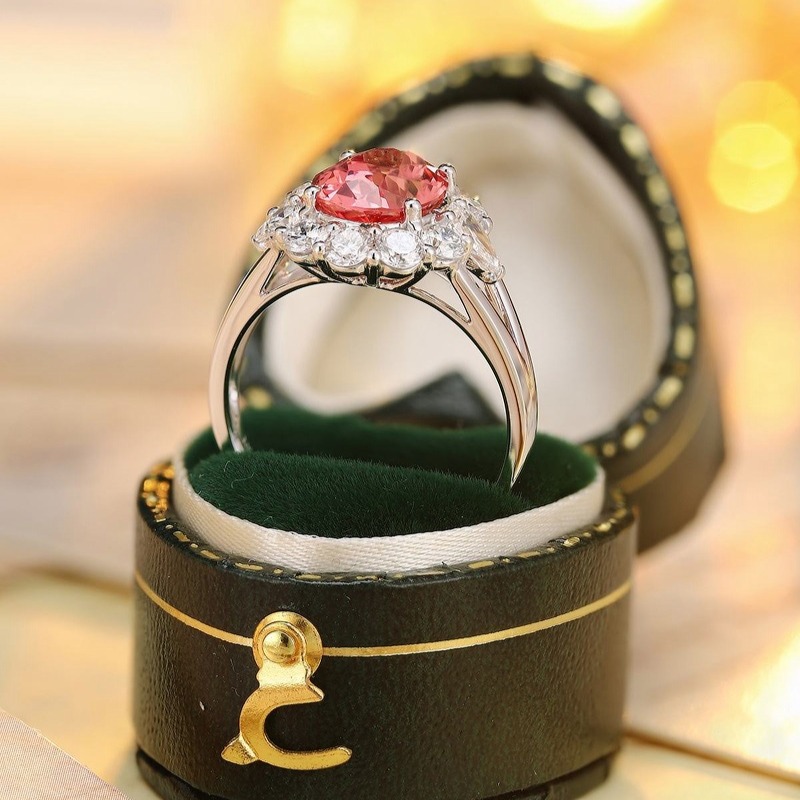
Custom engagement rings are among the most popular types of heirloom jewelry. Because they may be worn daily for decades, the gemstone, setting, and overall design deserve careful consideration.
The traditional identity and appearance of diamond jewelry.
Excellent scratch resistance for regular wear.
A classic gemstone for a solitaire, halo, or three-stone engagement ring.
A stone that aligns with family expectations surrounding diamond engagement rings.
The flexibility to create a timeless design using a recognized diamond gemstone.
A lab grown diamond is especially suitable for buyers who want the finished ring to resemble traditional diamond heirlooms while maintaining control over the budget.
A more affordable center gemstone.
Intense brilliance and noticeable rainbow-colored fire.
A larger-looking stone or a more elaborate custom design within a set budget.
A durable gemstone suitable for regular wear.
To prioritize craftsmanship, personalization, and visual impact over diamond identity.
Moissanite can be an excellent choice for custom engagement rings when the goal is to create a distinctive and meaningful piece without spending as much on the center stone.
Ultimately, both options can be appropriate for an engagement ring intended to remain in the family.
The gemstone is important, but the setting also determines how well the jewelry withstands long-term use.
Popular metals for custom heirloom jewelry include platinum, 14K gold, and 18K gold. Each has its own characteristics.
Platinum is naturally white, corrosion-resistant, and widely used in fine jewelry. Its suitability depends on the specific alloy and construction, but it can be an excellent choice for a durable heirloom setting.
14K gold contains approximately 58.3% pure gold, with other metals added to improve its properties. It offers a practical balance of durability, appearance, and cost.
18K gold contains 75% pure gold and is valued for its richer gold content and luxurious appearance. Its hardness and wear resistance depend on the alloy composition and design.
For everyday rings, the setting should have sufficient thickness, well-constructed prongs, and a design appropriate for the gemstone's dimensions. Delicate details may require more frequent inspections, especially if the ring is worn during physical activities.
The right metal should complement the gemstone while providing a secure and maintainable structure.
Choosing a durable gemstone is only the beginning. The way a piece of jewelry is designed, manufactured, and maintained determines how well it survives over time.
Classic styles such as solitaire rings, three-stone rings, and simple pendants tend to remain versatile across changing fashion trends.
This does not mean an heirloom must be traditional. A modern or unconventional design can be equally meaningful, especially when it reflects the original owner's personality.
A secure setting is essential for protecting the center stone. Prongs should be properly formed, the band should have appropriate dimensions, and the overall design should be suitable for the wearer's lifestyle.
Ask the jeweler about construction quality, repair options, resizing limitations, and maintenance requirements before approving the final design.
Retain the purchase receipt, gemstone documentation, metal specifications, custom design drawings, and warranty information where available.
These records can help future owners understand the piece's materials and make informed decisions about repairs or modifications.
For lab grown diamonds, retain any relevant grading report. For moissanite, keep the supplied product documentation and specifications, recognizing that the level of detail varies by seller.
Have the setting inspected periodically by a qualified jeweler, particularly if the ring is worn daily. Loose prongs, worn settings, and damaged bands should be addressed before the gemstone becomes insecure.
Remove jewelry when appropriate during activities that expose it to strong impacts or harsh chemicals, and clean it according to the jeweler's recommendations.
A handwritten note, engraving, or record of the occasion can help preserve the emotional significance of custom heirloom jewelry.
Over time, these details may become as important to future generations as the gemstone itself.
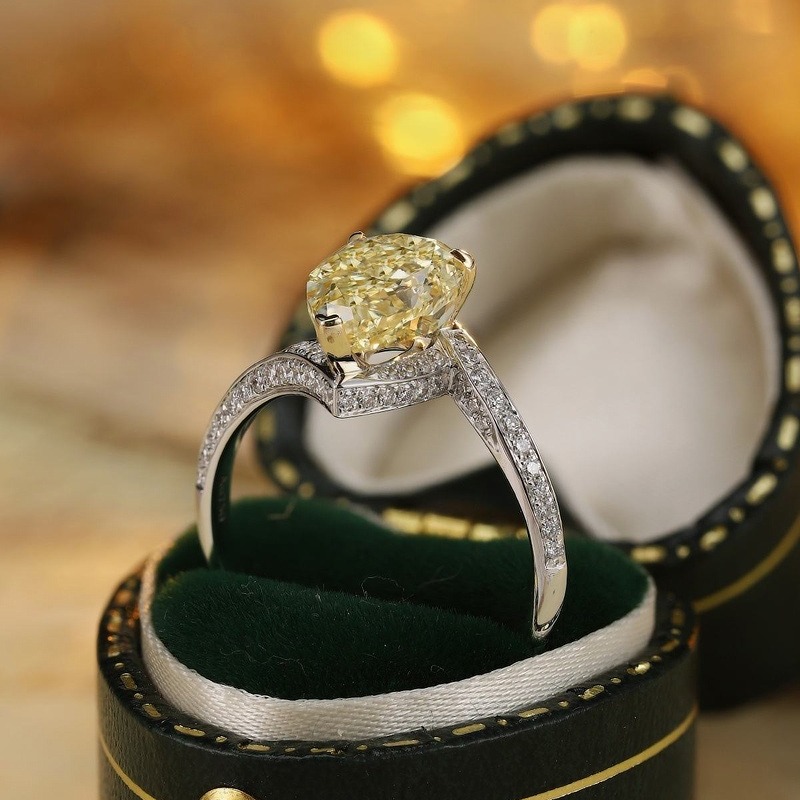
The following comparison summarizes the main differences when choosing a gemstone for heirloom custom jewelry.
| Consideration | Lab grown diamond | Moissanite |
|---|---|---|
| Gemstone identity | Real diamond | Silicon carbide gemstone |
| Hardness | 10 on the Mohs scale | Approximately 9.25 |
| Visual character | Familiar diamond brilliance and fire | Strong brilliance with pronounced colorful fire |
| Typical purchase cost | Generally higher | Generally lower |
| Scratch resistance | Excellent | Very good |
| Resale considerations | Market value can decline substantially | Typically more limited resale market |
| Custom design flexibility | Excellent | Excellent |
| Suitability for heirloom jewelry | Excellent | Excellent |
The best choice depends on what you want the finished piece to represent. Lab grown diamonds offer traditional diamond appeal, while moissanite offers a distinctive sparkle and greater affordability.
Yes. Moissanite is durable enough for many types of heirloom jewelry, including rings, pendants, and earrings. Its hardness and wear resistance make it suitable for long-term use when paired with a well-made setting and maintained appropriately.
Both gemstones can last for generations. Lab grown diamonds have greater hardness and scratch resistance, but overall longevity also depends on the cut, setting, exposure to impacts, and quality of care.
A lab grown diamond may have greater traditional appeal and market recognition as a diamond. However, heirloom value is not determined by the gemstone alone. Sentimental significance, craftsmanship, design, and family history can make either gemstone meaningful.
Both gemstones generally require routine cleaning and occasional setting inspections. The long-term maintenance cost depends more on the jewelry's construction, metal, and condition than on the difference between moissanite and lab grown diamond alone.
A lab grown diamond may be preferable if the family values traditional diamond engagement rings. Moissanite is a strong alternative if affordability, visual impact, and custom design flexibility are higher priorities.
Yes. A custom jeweler can combine a lab grown diamond center stone with moissanite accent stones, or use a moissanite center stone with diamond accents. The design should account for the different optical characteristics of the gemstones to create a balanced appearance.
Not necessarily. A gemstone's proportions, cut quality, setting security, and compatibility with the overall design are more important than size alone. A well-proportioned stone in a thoughtfully constructed setting may be a better heirloom than an oversized gemstone in a fragile design.
When comparing lab grown diamonds and moissanite for heirloom custom jewelry, neither gemstone is universally better. Each offers advantages that appeal to different buyers.
Lab grown diamonds are generally the stronger choice for people who want traditional diamond identity, excellent scratch resistance, and a classic look associated with fine family jewelry. They are particularly appealing for custom engagement rings and wedding jewelry intended to follow established diamond traditions.
Moissanite is an excellent choice for people who prioritize affordability, distinctive sparkle, and design flexibility. Its durability makes it suitable for many long-lasting custom pieces, while its lower typical cost can leave more room in the budget for craftsmanship and personalization.
For either gemstone, the most important factors are a well-designed setting, reliable craftsmanship, proper maintenance, and the emotional meaning attached to the jewelry. Neither gemstone guarantees financial appreciation, and both can become cherished heirlooms when chosen thoughtfully.
If you want a classic diamond heirloom, choose a lab grown diamond. If you want a beautiful, durable, and budget-conscious piece with exceptional sparkle, consider moissanite. The best heirloom is ultimately the one that reflects your values, celebrates your story, and can be cared for and treasured by future generations.