
购物车
您的购物车还没有商品!
When buying a lab grown diamond, many shoppers focus on the four Cs—cut, color, clarity, and carat weight. However, some buyers and jewelry enthusiasts also pay attention to another characteristic: fluorescence under ultraviolet (UV) light.
This leads to a common question:
Does an HPHT lab diamond show different fluorescence under UV light compared with other diamonds?
The answer is yes, HPHT lab diamonds can display different fluorescence reactions, but the appearance depends on the individual diamond's growth characteristics, treatments, and internal structure. Fluorescence is not determined only by whether a diamond is lab grown or natural, or whether it was created using HPHT technology.
Understanding how HPHT lab diamond fluorescence works can help buyers better evaluate diamond appearance and make more informed purchasing decisions.
Diamond fluorescence refers to the visible glow a diamond produces when exposed to ultraviolet light.
Most commonly, this is observed under long-wave UV light, such as the type used in professional gemological testing.
The fluorescence color can vary, including:
Blue
Yellow
Green
Orange
White
Blue fluorescence is the most frequently observed reaction in diamonds.
Fluorescence occurs because certain structural features or trace elements inside the diamond interact with UV energy and release visible light.
It is important to understand that fluorescence is a natural characteristic of some diamonds and is not automatically a sign of poor quality.
Yes, HPHT lab diamonds can show fluorescence under UV light.
Because HPHT diamonds are created under high-pressure and high-temperature conditions, their crystal growth environment can influence their internal characteristics.
Some HPHT lab diamonds may show:
Blue fluorescence
Green fluorescence
Yellow fluorescence
Weak or no fluorescence
The exact reaction depends on the individual stone.
Two HPHT lab diamonds created using the same production method may still display different fluorescence patterns because each diamond develops its own internal structure.
The fluorescence behavior of an HPHT lab diamond is related to factors inside the crystal.
Possible influences include:
Small amounts of elements within the diamond structure can affect how the stone reacts to UV light.
Nitrogen, for example, can influence optical properties and may contribute to different fluorescence responses.
During HPHT diamond production, controlled pressure and temperature conditions create the diamond crystal.
Variations during growth can affect internal features and optical behavior.
Some HPHT lab diamonds may undergo additional processes to improve or modify appearance.
These treatments can influence how the diamond reacts under certain lighting conditions.
Stress within the crystal structure can also affect optical characteristics, including fluorescence behavior.
HPHT and CVD are the two major methods used to create lab grown diamonds.
While both produce real diamonds, their growth processes are different.
HPHT diamonds are created using high pressure and high temperature to encourage diamond crystal growth.
They may display fluorescence patterns associated with HPHT growth characteristics.
CVD diamonds are created by depositing carbon atoms layer by layer in a controlled chamber.
Their internal structures can differ from HPHT diamonds, which may result in different fluorescence responses.
However, there is no universal rule that HPHT diamonds always fluoresce more or less than CVD diamonds.
The fluorescence level depends on the individual gemstone rather than simply the production method.
In most normal lighting environments, fluorescence has little noticeable effect on a diamond's appearance.
UV light is not present at the same intensity in every environment, so many diamonds with fluorescence appear identical during everyday wear.
However, under specific lighting conditions, fluorescence can influence appearance.
For example:
Strong blue fluorescence may create a subtle cool glow under UV-rich lighting.
Certain fluorescence characteristics may slightly affect how some diamonds appear in sunlight or nightclub lighting.
Diamonds with very strong fluorescence should be evaluated individually to determine whether the effect is desirable.
A diamond's cut quality usually has a much greater impact on sparkle and brilliance than fluorescence.
No.
Strong fluorescence is not automatically a problem.
The effect depends on:
Diamond color
Clarity
Cut quality
Personal preference
Lighting conditions
Some buyers appreciate fluorescence because it creates a unique optical characteristic.
Others prefer diamonds with little or no fluorescence because they want the most traditional appearance possible.
When selecting an HPHT lab grown diamond, fluorescence should be considered as one factor among many rather than the only deciding point.
Fluorescence alone cannot reliably determine whether a diamond is HPHT or CVD.
Gemologists use advanced testing methods to identify diamond origin and characteristics.
A UV reaction may provide additional information, but it is not a complete identification method.
Professional laboratories evaluate diamonds using:
Spectroscopic analysis
Growth pattern examination
Internal characteristics
Advanced detection equipment
For buyers, a reliable grading report is more valuable than trying to identify a diamond only through fluorescence.
The effect of fluorescence on value depends on the specific diamond and market preferences.
For some diamonds, fluorescence may have little impact.
For others, strong fluorescence can influence pricing depending on:
Diamond color grade
Overall appearance
Buyer preferences
Market demand
When comparing HPHT lab diamond prices, buyers should evaluate the complete diamond profile rather than focusing on fluorescence alone.
Important factors include:
Cut quality
Color
Clarity
Carat weight
Certification
Shape
Overall visual appeal
The right choice depends on your personal preferences.
An HPHT lab diamond with fluorescence may be a good choice if you:
Appreciate unique optical characteristics
Prefer a specific visual effect
Find a well-priced diamond with desirable specifications
A diamond with little or no fluorescence may be preferred if you:
Want a more traditional appearance
Prefer a simple comparison process
Are selecting a very high-color diamond
The most important step is viewing the diamond as a complete gemstone rather than judging one characteristic separately.
Before purchasing an HPHT lab diamond, consider:
A professional grading report may include fluorescence information.
Photos and videos under different lighting conditions can help show the diamond's appearance.
Looking at diamonds with different fluorescence levels can help you understand the differences.
A diamond's setting and surrounding metal can influence how its color and brilliance appear.
For most jewelry owners, fluorescence does not create a major concern during everyday wear.
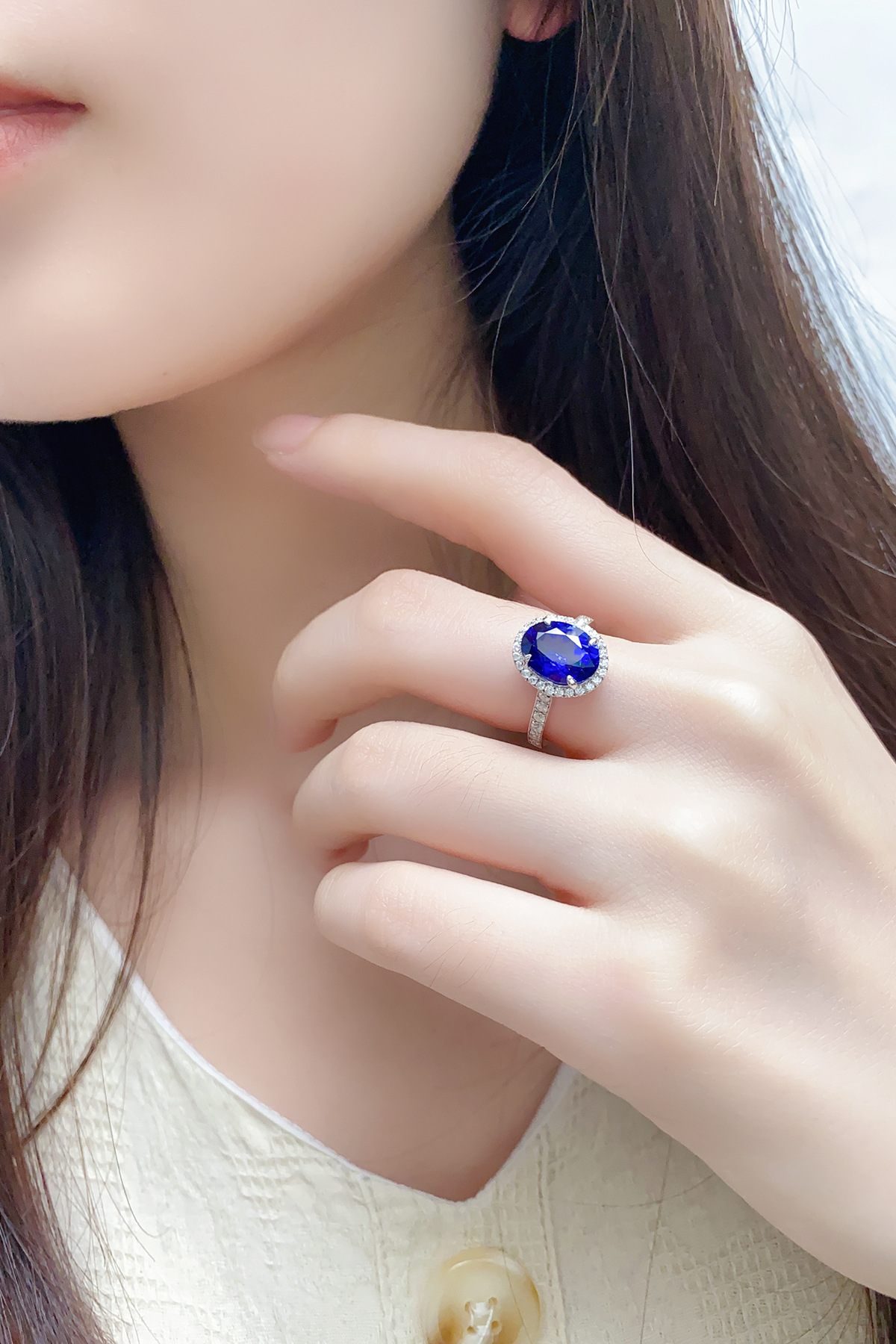
An HPHT lab diamond ring, necklace, or earrings can maintain its brilliance and sparkle regardless of whether it has weak or strong fluorescence.
Proper care remains more important:
Clean the diamond regularly
Avoid harsh impacts
Check the setting periodically
Store jewelry safely
Fluorescence is simply one characteristic that contributes to the diamond's overall personality.
Does an HPHT lab diamond show different fluorescence under UV light?
Yes, HPHT lab diamonds can display different fluorescence reactions, but the effect varies from stone to stone. The fluorescence pattern is influenced by internal characteristics, growth conditions, treatments, and crystal structure.
While fluorescence can provide interesting information about a diamond, it should not be the only factor when choosing a lab grown diamond.
A high-quality HPHT lab diamond is evaluated through its complete combination of cut, color, clarity, carat weight, certification, and visual appeal. Understanding fluorescence simply helps buyers make a more informed decision when selecting a diamond that matches their preferences.









