培育钻石、莫桑石与培育彩宝。可定制珠宝工厂。

购物车

您的购物车还没有商品!

Where do moissanite stones come from

Where do moissanite stones come from

Sep 30, 2026
Where do moissanite stones come from? Many jewelry lovers assume moissanite is mined like diamonds or other natural gemstones. The accurate answer is: natural moissanite originates from meteorites and rare geological formations in nature, while 100% of wearable, jewelry-grade moissanite sold today is lab-grown. Unlike diamonds, rubies, or sapphires, there are no commercial moissanite mines on Earth. This article explains the real cosmic origin of moissanite, its discovery history, and how modern manufacturers produce high-quality moissanite gemstones for fine jewelry.
1. The Natural Cosmic Origin of Moissanite
Moissanite is scientifically named silicon carbide (SiC). Its natural form is extremely rare and has extraterrestrial roots. In 1893, Nobel Prize-winning chemist Henri Moissan first discovered tiny crystalline particles in rock samples from the Canyon Diablo meteorite crater in Arizona. These unique space-derived crystals were later named “moissanite” in his honor.

Natural moissanite primarily comes from two sources in nature:

First, meteorite debris and pre-solar space materials. Most natural moissanite grains are found inside fallen meteorites, formed under extreme high temperature and pressure in dying stars before landing on Earth.
Second, ultra-deep volcanic and mantle rock. Trace amounts of micro moissanite crystals exist in rare high-pressure geological structures such as kimberlite pipes and mantle-derived igneous rocks.

Crucially, all naturally occurring moissanite is microscopic. No natural moissanite crystals are large, clear, or pure enough to be cut into wearable jewelry stones. Natural moissanite is rarer than natural diamonds, yet completely unfit for commercial jewelry use.
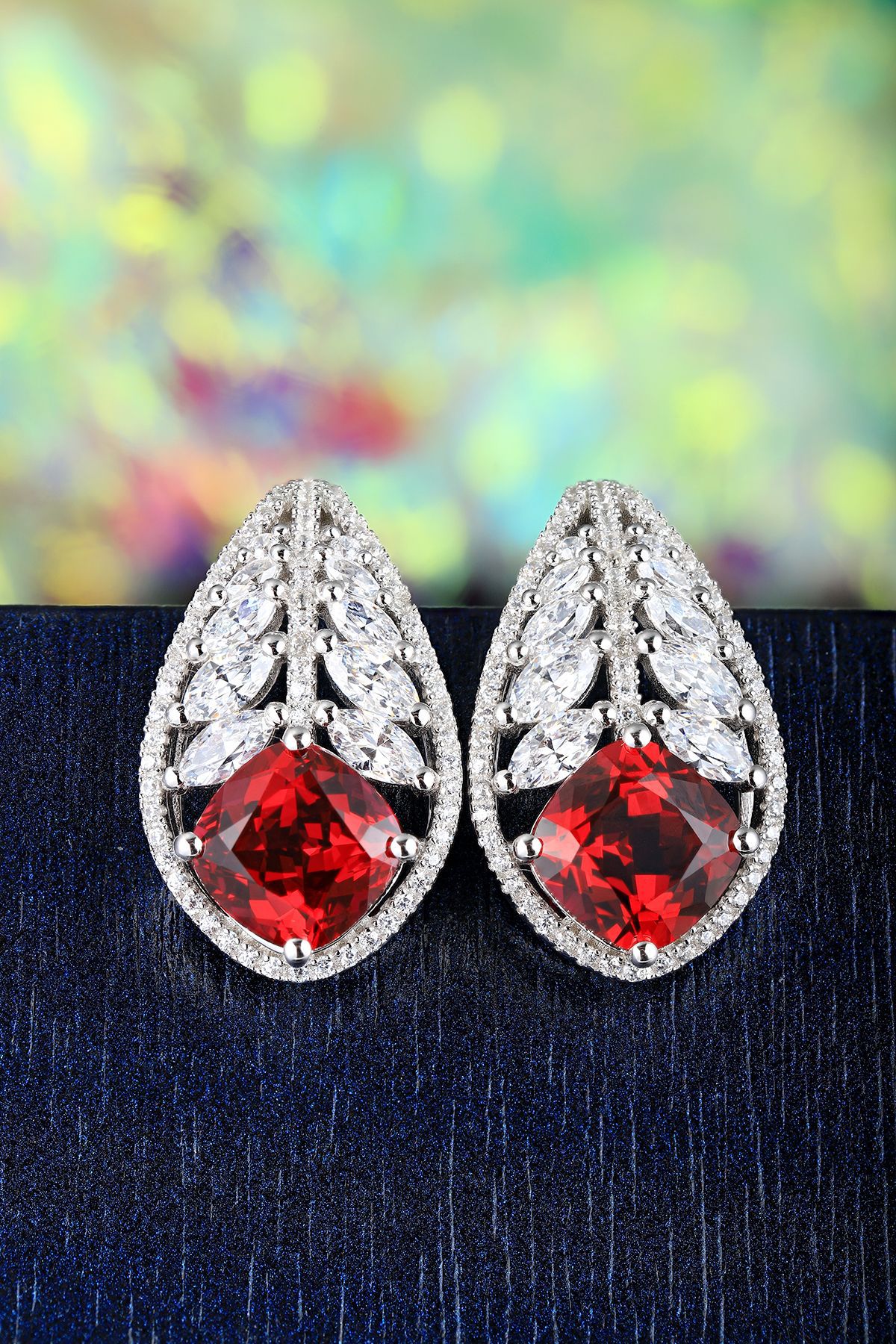
培育红宝石耳钉.jpg

2. Why There Are No Mined Moissanite Gemstones
Unlike diamonds that have large-scale mining deposits, moissanite has no mineable resources on the planet. Even in the few geological sites that yield natural moissanite crystals, the grains are too tiny, opaque, and impure for jewelry production.
For over a century since its discovery, jewelers could not use moissanite in fine jewelry. It was not until modern lab-grown technology matured that moissanite became accessible to consumers. This is the key difference: diamonds are mined from nature, while moissanite is created artificially based on natural cosmic mineral properties.
3. How Modern Lab-Grown Moissanite Is Produced
Today’s moissanite jewelry stones are produced through precise scientific simulation that replicates the natural formation environment of cosmic moissanite.
Manufacturers use high-purity silicon and carbon elements as raw materials. Inside a high-temperature vacuum growth chamber, under strictly controlled temperature and pressure conditions identical to space and deep-earth geological environments, the elements slowly crystallize into pure, large-size moissanite rough crystals.
After crystal growth, professional gem cutters shape, polish, and grade each stone to form the brilliant, colorless moissanite used for rings, earrings, pendants, and stacking bands. The whole process retains the exact chemical composition, hardness, and optical properties of natural moissanite.
4. Is Lab-Grown Moissanite Real or Fake?
Many buyers confuse lab-grown moissanite with fake diamonds or glass simulants. In fact, lab-grown moissanite is a real, authentic gemstone.

It is not a synthetic imitation of diamond. It is an independent gem mineral with fixed chemical properties, 9.25 Mohs hardness, and unique high dispersion fire. Lab-grown moissanite perfectly restores the characteristics of rare cosmic moissanite, with better clarity, higher purity, and more stable color than natural microscopic moissanite.
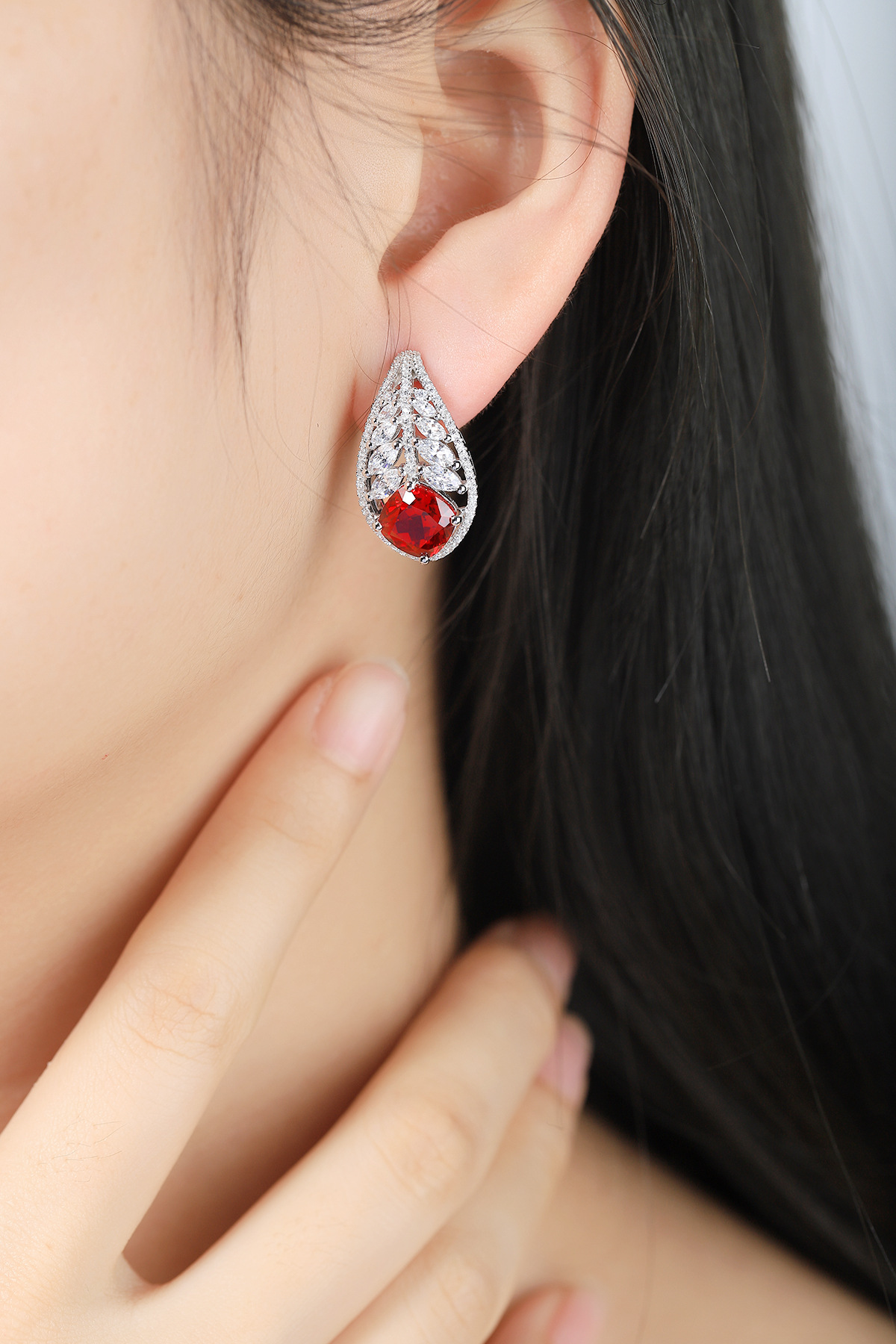
培育红宝石耳钉-.jpg

5. Origin Difference: Moissanite vs Lab-Grown Diamond
Although both are lab-made gemstones, their origins are fundamentally different:
Lab-grown diamonds replicate natural diamond carbon crystal structures, belonging to the diamond family.
Moissanite originates from space mineral resources, with a unique silicon carbide crystal structure that owns stronger rainbow fire and higher hardness stability.
6. Factory Insights & Origin Advantages
As a professional Wuzhou jewelry factory, we confirm that all commercial moissanite jewelry globally adopts lab-cultivated technology. Lab-grown moissanite avoids ecological damage caused by mineral mining, features zero conflict resources, and delivers stable quality with no natural flaws.
With controllable laboratory production, moissanite can maintain high color grades (D-F color), high clarity, and ideal cutting effects, providing brighter and more durable sparkle than most mined gemstones.



We use cookie to improve your online experience. By continuing to browse this website, you agree to our use of cookie.

Cookies

Please read our Terms and Conditions and this Policy before accessing or using our Services. If you cannot agree with this Policy or the Terms and Conditions, please do not access or use our Services. If you are located in a jurisdiction outside the European Economic Area, by using our Services, you accept the Terms and Conditions and accept our privacy practices described in this Policy.
We may modify this Policy at any time, without prior notice, and changes may apply to any Personal Information we already hold about you, as well as any new Personal Information collected after the Policy is modified. If we make changes, we will notify you by revising the date at the top of this Policy. We will provide you with advanced notice if we make any material changes to how we collect, use or disclose your Personal Information that impact your rights under this Policy. If you are located in a jurisdiction other than the European Economic Area, the United Kingdom or Switzerland (collectively “European Countries”), your continued access or use of our Services after receiving the notice of changes, constitutes your acknowledgement that you accept the updated Policy. In addition, we may provide you with real time disclosures or additional information about the Personal Information handling practices of specific parts of our Services. Such notices may supplement this Policy or provide you with additional choices about how we process your Personal Information.


Cookies

Cookies are small text files stored on your device when you access most Websites on the internet or open certain emails. Among other things, Cookies allow a Website to recognize your device and remember if you've been to the Website before. Examples of information collected by Cookies include your browser type and the address of the Website from which you arrived at our Website as well as IP address and clickstream behavior (that is the pages you view and the links you click).We use the term cookie to refer to Cookies and technologies that perform a similar function to Cookies (e.g., tags, pixels, web beacons, etc.). Cookies can be read by the originating Website on each subsequent visit and by any other Website that recognizes the cookie. The Website uses Cookies in order to make the Website easier to use, to support a better user experience, including the provision of information and functionality to you, as well as to provide us with information about how the Website is used so that we can make sure it is as up to date, relevant, and error free as we can. Cookies on the Website We use Cookies to personalize your experience when you visit the Site, uniquely identify your computer for security purposes, and enable us and our third-party service providers to serve ads on our behalf across the internet.

We classify Cookies in the following categories:
 ●  Strictly Necessary Cookies
 ●  Performance Cookies
 ●  Functional Cookies
 ●  Targeting Cookies


Cookie List
A cookie is a small piece of data (text file) that a website – when visited by a user – asks your browser to store on your device in order to remember information about you, such as your language preference or login information. Those cookies are set by us and called first-party cookies. We also use third-party cookies – which are cookies from a domain different than the domain of the website you are visiting – for our advertising and marketing efforts. More specifically, we use cookies and other tracking technologies for the following purposes:

Strictly Necessary Cookies
These cookies are necessary for the website to function and cannot be switched off in our systems. They are usually only set in response to actions made by you which amount to a request for services, such as setting your privacy preferences, logging in or filling in forms. You can set your browser to block or alert you about these cookies, but some parts of the site will not then work. These cookies do not store any personally identifiable information.

Functional Cookies
These cookies enable the website to provide enhanced functionality and personalisation. They may be set by us or by third party providers whose services we have added to our pages. If you do not allow these cookies then some or all of these services may not function properly.

Performance Cookies
These cookies allow us to count visits and traffic sources so we can measure and improve the performance of our site. They help us to know which pages are the most and least popular and see how visitors move around the site. All information these cookies collect is aggregated and therefore anonymous. If you do not allow these cookies we will not know when you have visited our site, and will not be able to monitor its performance.

Targeting Cookies
These cookies may be set through our site by our advertising partners. They may be used by those companies to build a profile of your interests and show you relevant adverts on other sites. They do not store directly personal information, but are based on uniquely identifying your browser and internet device. If you do not allow these cookies, you will experience less targeted advertising.

How To Turn Off Cookies
You can choose to restrict or block Cookies through your browser settings at any time. Please note that certain Cookies may be set as soon as you visit the Website, but you can remove them using your browser settings. However, please be aware that restricting or blocking Cookies set on the Website may impact the functionality or performance of the Website or prevent you from using certain services provided through the Website. It will also affect our ability to update the Website to cater for user preferences and improve performance. Cookies within Mobile Applications

We only use Strictly Necessary Cookies on our mobile applications. These Cookies are critical to the functionality of our applications, so if you block or delete these Cookies you may not be able to use the application. These Cookies are not shared with any other application on your mobile device. We never use the Cookies from the mobile application to store personal information about you.

If you have questions or concerns regarding any information in this Privacy Policy, please contact us by email at . You can also contact us via our customer service at our Site.


Language ▾


