
Cart
Your shopping cart doesn't have any products yet!
What Are Lab-Grown Colored Gemstones Made Of? Understanding the Science Behind Sustainable Luxury
As lab-grown colored gemstones gain prominence in fine jewelry, a common question arises: “What exactly are they made of?” Unlike simulants such as cubic zirconia or glass, lab-grown colored gemstones are not imitations. They are genuine crystalline materials with identical chemical compositions, crystal structures, and optical properties to their mined counterparts—created above ground through controlled scientific processes rather than extracted from the earth.
Understanding their material basis is key to appreciating their value, performance, and ethical advantages. Below, we break down the core compositions and synthesis methods behind today’s most popular lab-grown colored gems.
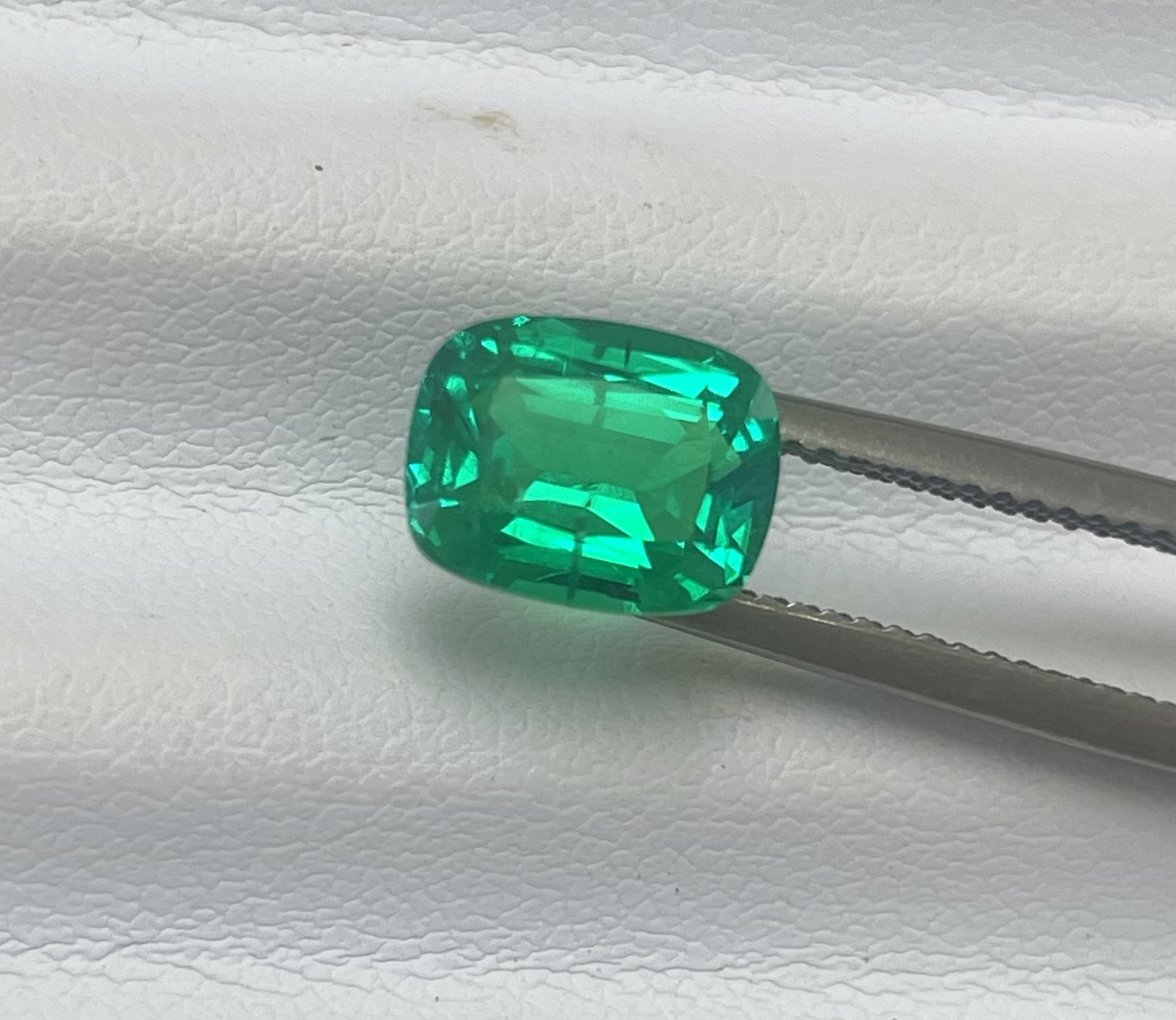
1. Hydrothermal Emeralds: Beryllium Aluminum Silicate, Grown Like Nature
Lab-grown emeralds are composed of beryl (Be₃Al₂Si₆O₁₈), doped with chromium and/or vanadium to produce their signature green hue—the same chemistry as natural Colombian or Zambian emeralds.
They are primarily synthesized via the hydrothermal method, which replicates the high-pressure, aqueous conditions of Earth’s crust. In an autoclave, nutrient-rich solutions containing beryllium, aluminum, silica, and chromic ions dissolve at elevated temperatures and recrystallize onto a seed plate over weeks or months. The result is a true beryl crystal with natural-looking jardin inclusions, vivid saturation, and refractive index matching mined emeralds. Crucially, this process avoids the flux residues common in older synthetic methods, yielding cleaner stones suitable for high-end jewelry.
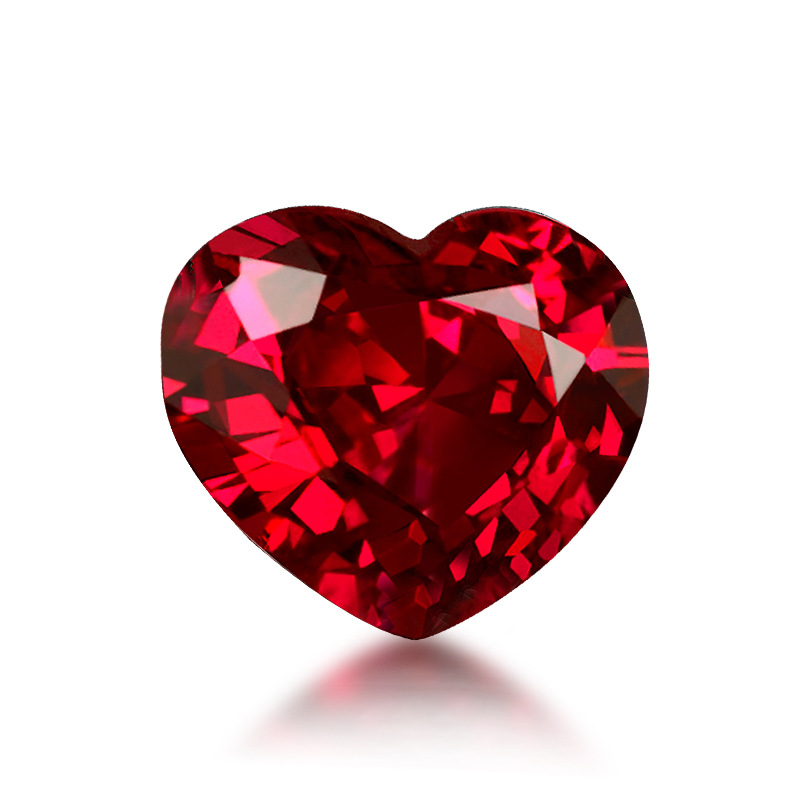
2. Lab-Grown Rubies & Sapphires: Corundum with Precision Doping
Rubies and sapphires are both varieties of corundum (Al₂O₃). Their color comes from trace elements: chromium for ruby red; iron and titanium for sapphire blue; vanadium or magnesium for fancy hues like pink, yellow, or padparadscha.
Two primary methods are used:
- Flame Fusion (Verneuil): A cost-effective technique where powdered alumina and dopants are melted in an oxyhydrogen flame and deposited onto a boule. Best suited for commercial-grade stones.
- Flux Growth & Hydrothermal: These slower, more refined methods produce gem-quality crystals with fewer strain patterns and more natural inclusion morphology. Hydrothermal corundum, in particular, mimics geological growth so closely that even advanced gem labs require specialized testing to distinguish it from natural.
Both yield Al₂O₃ crystals indistinguishable from mined corundum in hardness (9 on Mohs scale), luster, and durability.
3. Lab-Grown Paraíba Tourmaline: Complex Borosilicate Chemistry
Natural Paraíba tourmaline owes its neon blue-green glow to copper and manganese within a complex borosilicate structure (Na(Al,Li)₃Al₆(BO₃)₃Si₆O₁₈(OH,F)₄). Replicating this in the lab is among the most challenging feats in gem synthesis.
Advanced hydrothermal systems now enable the controlled incorporation of copper into the tourmaline lattice—a breakthrough achieved only in the last decade. The resulting lab-grown Paraíba shares the exact elemental fingerprint and pleochroic behavior of Brazilian or Mozambican originals. While still rare and premium-priced, these stones offer consistent color and ethical sourcing unattainable in the volatile natural market.
4. Moissanite: Silicon Carbide with Exceptional Fire
Though often grouped with colored gems, moissanite (SiC) is a distinct material—not a form of quartz or diamond. Naturally occurring moissanite is exceedingly rare; all jewelry-grade material is lab-created via sublimation or CVD.
Its silicon carbide composition gives it a higher refractive index (2.65–2.69) and dispersion than diamond, producing exceptional fire. Modern doping techniques allow color tuning from near-colorless to champagne, gray, or even greenish tones, expanding its use beyond diamond alternatives into standalone colored gem applications.
Why Material Identity Matters
The fact that lab-grown colored gemstones share the same atomic architecture as natural ones has profound implications:
- Performance: They respond identically to cutting, polishing, heat treatment, and setting.
- Grading: They can be evaluated using standard gemological criteria (color, clarity, cut, carat).
- Durability: Hardness, toughness, and stability match natural equivalents.
- Value Perception: As consumers recognize their authenticity, resale and appraisal frameworks are evolving accordingly.
Crucially, because they are grown under controlled conditions, lab-grown gems often exhibit superior consistency in color and clarity—making them ideal for matched suites, calibrated accents, and design-forward pieces where uniformity matters.
Sustainability Through Material Science
Beyond aesthetics, the material basis of lab-grown gems enables verifiable sustainability. No open-pit mining, no acid leaching, no conflict financing. Water and energy use vary by method, but leading producers increasingly integrate renewable power and closed-loop water systems. Full traceability—from raw oxide to finished stone—is inherent to the process, offering transparency impossible in many natural supply chains.
Final Thoughts
Lab-grown colored gemstones are not “fake” or “synthetic” in the pejorative sense. They are real minerals, born of human ingenuity rather than geological chance. Their materials are authentic; their creation is intentional; their beauty is uncompromised.
For jewelers, designers, and conscious consumers, understanding this material truth transforms perception. It shifts the conversation from “Is it real?” to “How was it made—and what values does it represent?” In an era demanding both luxury and responsibility, lab-grown colored gemstones offer a path where science, ethics, and splendor converge.









