
Cart
Your shopping cart doesn't have any products yet!
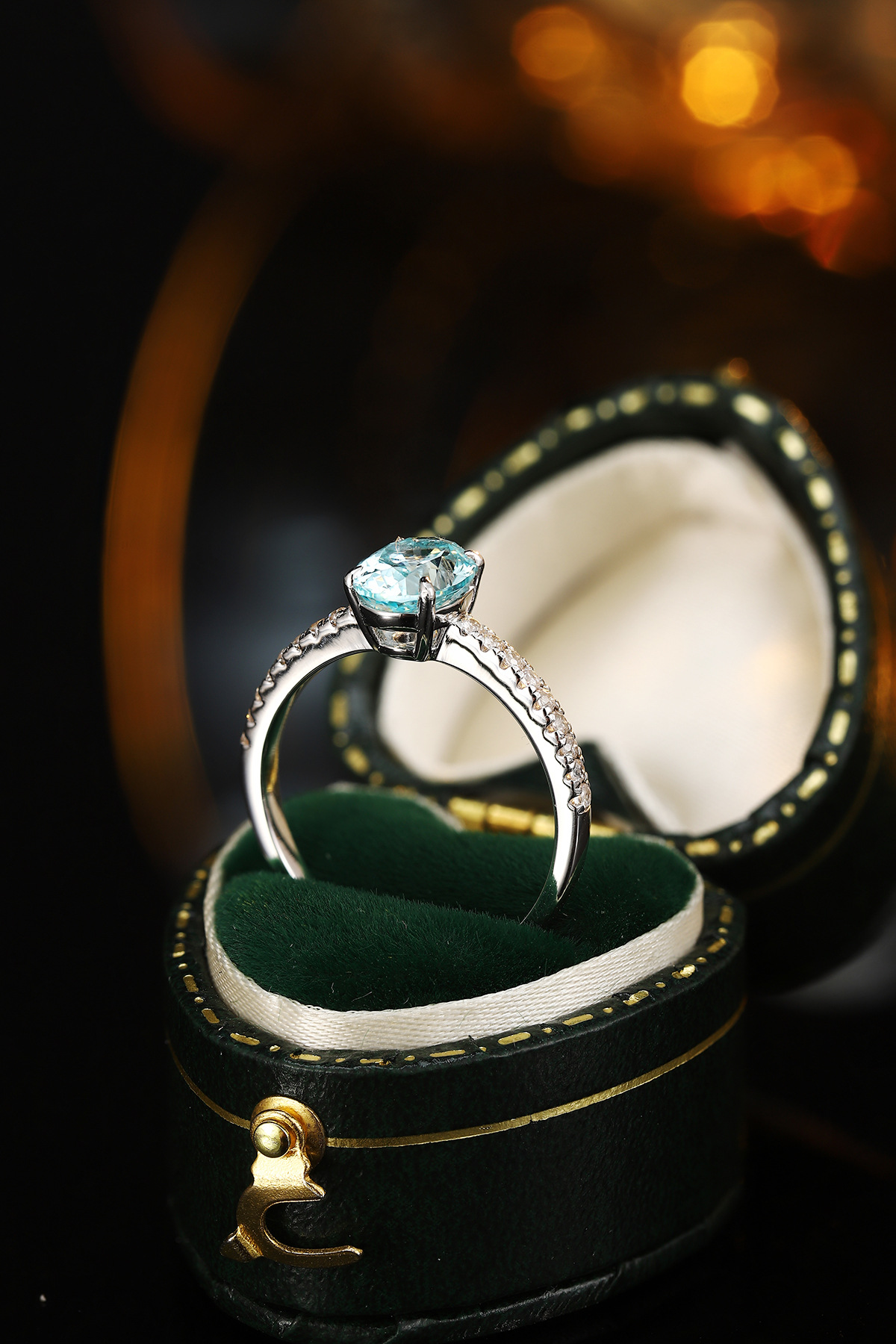
When buying moissanite from a Wuzhou supplier, one question that often comes up is: Do Wuzhou moissanite come with GRA certificates?
The short answer is: some Wuzhou moissanite may be sold with GRA-related cards or reports, but a GRA certificate should not automatically be assumed to come with every Wuzhou moissanite stone. Documentation depends on the supplier, the product, the stone size, the production batch, and how the moissanite is marketed.
For buyers purchasing loose moissanite, wholesale quantities, or finished jewelry, it is important to understand what a GRA document actually represents, whether it corresponds to the specific stone being purchased, and what information it can realistically provide.
GRA is a name commonly associated in the moissanite market with moissanite grading reports or certificates that provide information about a stone.
Depending on the document and supplier, information may include details such as:
Stone type
Shape
Carat-equivalent information
Color
Clarity
Cut
Measurements
Identification or report number
However, buyers should avoid assuming that every document marketed as a “GRA certificate” has the same status, testing scope, or independent verification process.
The terminology used by sellers can also vary. A document may be described as a certificate, grading report, identification card, or authenticity card.
Therefore, the most useful approach is to examine the actual document rather than relying only on the word “GRA.”
No.
There is no reason to assume that every moissanite manufactured, cut, or sold through Wuzhou's jewelry supply chain automatically includes a GRA document.
A supplier may offer:
Moissanite with a GRA-related document
Moissanite without individual documentation
Documentation for selected stone sizes
Documentation available as an optional service
Batch-level information rather than an individual report
Supplier-issued quality information
The exact arrangement depends on the seller and product.
This distinction is particularly important for Wuzhou moissanite wholesale buyers. A supplier may quote one price for loose stones and another price if individual certificates or cards are requested.
Before ordering, ask specifically whether documentation is included in the quoted price.
Documentation can make it easier for a seller to communicate basic information about a stone.
For example, a report or certificate may identify characteristics such as the stone's:
Shape
Approximate size
Color
Clarity
Cut description
Identification number
For retail jewelry, this information can be useful when presenting a product to customers.
For wholesale buyers, documentation may also help organize inventory, particularly when different stone sizes, colors, or grades are being purchased.
However, a document should be treated as supporting information, not as a substitute for evaluating the actual stone and supplier.
Not necessarily.
This is an important distinction.
A grading document can provide useful information, but buyers should not automatically treat every GRA-labeled document as equivalent to a grading report from a major independent gemological laboratory.
When comparing documentation, consider:
Who issued the document?
What testing was performed?
Does the report identify the specific stone?
Is there a unique report number?
Can the report information be verified?
What characteristics were actually evaluated?
Is the document describing moissanite specifically?
Does the supplier provide documentation consistently?
The purpose of a document is more important than its appearance.
A professionally designed card does not by itself prove the quality of a gemstone.
If a Wuzhou supplier provides a GRA document, compare the information on the document with the actual stone.
Check details such as:
Does the stone have the same shape shown or listed on the document?
Compare the stated dimensions with the physical measurements of the stone where practical.
Check whether the visual color is consistent with the description.
Look at the stone under suitable lighting and magnification if necessary.
If the document includes an identification or report number, determine whether there is a verification method associated with that number.
For higher-value purchases, ask how the supplier connects the individual document to the individual stone.
This is especially important when buying multiple visually similar moissanite stones.
A buyer should not limit questions to whether a stone has a GRA certificate.
A more useful supplier inquiry might ask for:
Stone shape
Exact measurements
Color grade
Clarity information
Cut description
Polish
Symmetry
Weight
Whether the stone is loose or mounted
Whether the stone comes with documentation
Whether the document is included in the price
Whether documentation is individual or batch-based
Whether the document can be verified
Whether the same specifications can be maintained for future orders
This gives you a much clearer picture of what you are actually purchasing.
For wholesale buyers, certificates can become more complicated because orders may contain dozens, hundreds, or even thousands of stones.
Suppose a jewelry manufacturer orders 500 round moissanite stones in a particular size.
It may not be necessary or commercially practical for every small stone to have an individual document.
Instead, the buyer may prioritize:
Consistent dimensions
Consistent color
Consistent cut
Consistent polish
Consistent visual appearance
Accurate quantity
Batch quality control
For wholesale applications, stone consistency can be more important than whether every individual stone has a certificate.
This is especially true for small moissanite used in pavé, halo, tennis jewelry, earrings, and other repeated designs.
A missing GRA document does not automatically mean that the moissanite is poor quality.
Many buyers make the mistake of treating a certificate as the only indicator of gemstone quality.
Instead, evaluate the stone itself and the supplier's reliability.
A moissanite without individual documentation may still have:
Good cut quality
Strong brilliance
Consistent dimensions
Good polish
Attractive color
Suitable clarity
Reliable manufacturing consistency
Conversely, having a document does not automatically guarantee that the stone meets your specific expectations.
For this reason, a buyer should consider certificate + physical stone quality + supplier transparency + quality control together.
Documentation can be particularly useful when purchasing:
Larger center stones
Higher-value moissanite
Custom jewelry
Branded jewelry
Stones being resold individually
Stones for customers who specifically request documentation
Products where identification information is important
For a large center stone, a buyer may want more detailed information than would normally be necessary for a tiny accent stone.
The larger and more commercially significant the stone, the more useful detailed documentation can become.
Not every moissanite size necessarily receives the same documentation treatment.
Small stones may be sold in parcels or batches, while larger stones are more likely to be individually identified.
For example:
Small melee stones:
Batch specifications and quantity may be more important than individual certificates.
Medium accent stones:
The buyer may request consistent color, cut, and dimensions.
Large center stones:
Individual identification, measurements, and documentation may become more useful.
When sourcing from Wuzhou, ask the supplier how its documentation policy changes according to stone size and order quantity.
Finished jewelry creates another consideration.
A ring containing a moissanite center stone may be sold with a certificate or card, but buyers should determine whether the document refers to:
The loose gemstone
The finished jewelry item
The center stone
The entire piece
A particular product batch
A jewelry certificate and a gemstone grading document are not necessarily the same thing.
For retailers, this distinction should be communicated clearly to customers.
Not by itself.
Quality is multidimensional.
For moissanite, buyers may want to evaluate:
Cut quality
Facet precision
Brilliance
Fire
Color
Clarity
Polish
Symmetry
Dimensions
Shape consistency
Surface condition
A document can record some of these characteristics, but the physical appearance of the stone remains important.
For wholesale buyers, batch consistency is also critical.
A supplier that consistently delivers stones matching an approved sample can be more valuable to a jewelry business than a supplier that provides attractive documentation but inconsistent products.
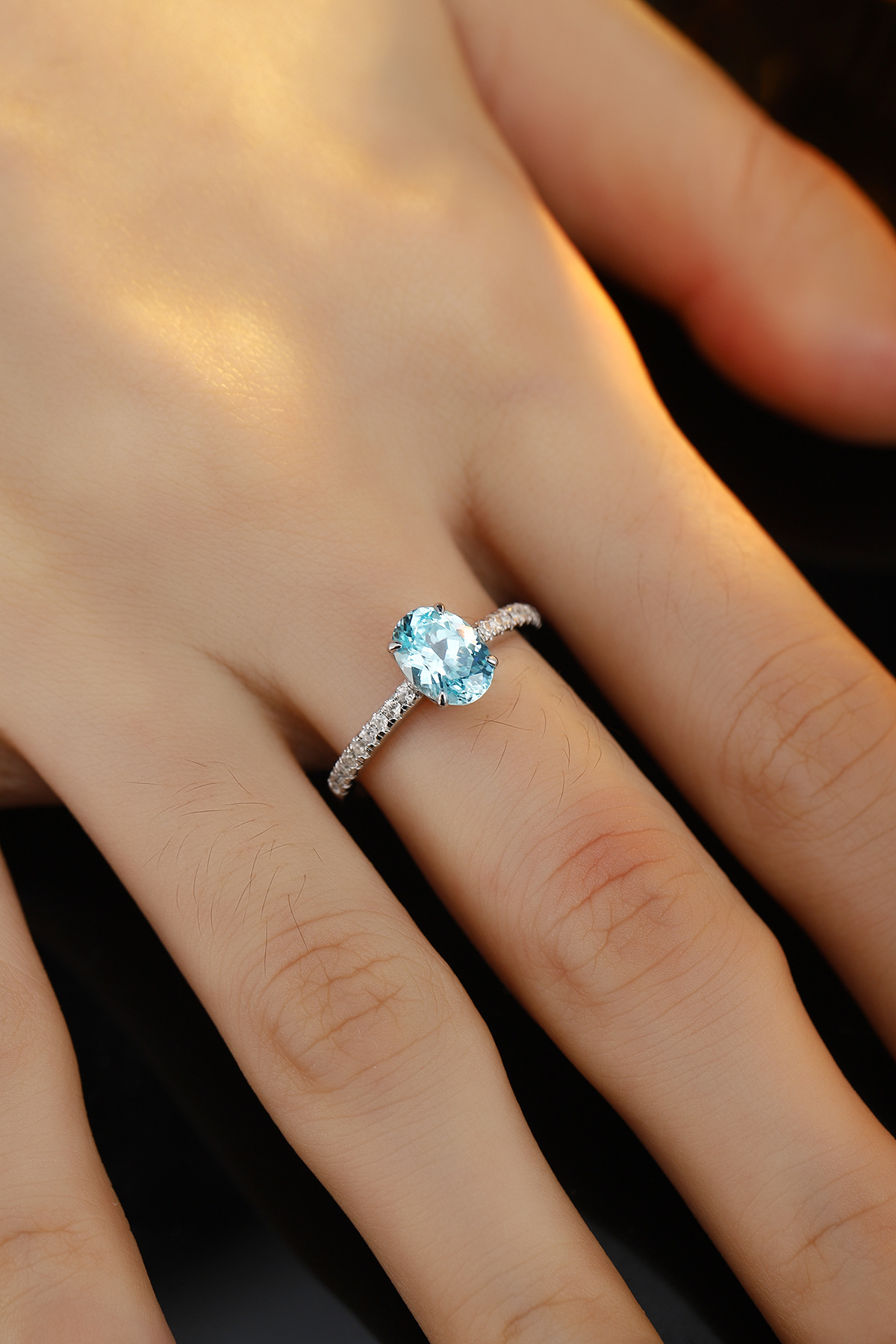
If you are considering purchasing Wuzhou moissanite, a simple sourcing process can reduce potential problems.
Specify:
Shape
Size
Color
Clarity
Cut preference
Quantity
Intended jewelry application
Find out whether GRA documentation is included, optional, or unavailable.
Ask for photographs or videos of representative stones rather than relying only on catalog images.
For wholesale purchases, test a representative sample before committing to a large order.
If a GRA document is supplied, verify that its information corresponds to the actual stone.
Record acceptable tolerances for size, color, cut, and other important characteristics.
When ordering repeatedly, inspect samples from each batch rather than assuming that every future order will automatically match the first.
Documentation varies by supplier and product.
Buyers should examine the actual document and understand what it verifies.
A document cannot replace inspection of the stone itself.
Wholesale customers need consistency across multiple stones, not just one impressive sample.
Some suppliers may treat documentation as an additional service.
If a report number or verification system is provided, use the available information to check it rather than assuming the document is automatically linked to the stone.
For a jewelry business, these two concepts should be considered separately.
A certificate or report can provide information about an individual stone.
Supplier quality control determines whether the products delivered to you consistently meet your agreed specifications.
For a wholesale order, effective QC may involve checking:
Stone dimensions
Shape
Color
Cut
Polish
Symmetry
Quantity
Matching
Packaging
A strong purchasing process uses documentation where useful while also maintaining practical quality-control procedures.
Before placing an order, consider asking the supplier:
Does this moissanite come with a GRA certificate or report?
Is the document included in the quoted price?
Does the document correspond to each individual stone?
Can the report number be verified?
What information is listed on the document?
Are certificates available for all sizes?
Are wholesale stones documented individually or by batch?
Can you provide actual photos or videos of the stones?
Can you provide samples before a bulk order?
Can the same color, cut, and dimensions be maintained for future orders?
These questions can help prevent misunderstandings between the buyer and supplier.
So, do Wuzhou moissanite come with GRA certificates? Sometimes, but buyers should not assume that every Wuzhou moissanite stone automatically includes one.
Documentation depends on the supplier, stone size, product type, order quantity, and purchasing arrangement. More importantly, the presence of a GRA document should not be treated as the sole measure of moissanite quality.
For individual stones, documentation can provide useful identification and grading information. For wholesale orders, consistent cut, color, dimensions, polish, symmetry, and overall appearance may be even more important.
If you are sourcing Wuzhou moissanite for jewelry production or resale, the safest approach is to ask exactly what documentation is provided, verify what the document represents, request representative samples, and establish clear product specifications before placing a large order.
A transparent supplier should be able to explain its certificate policy clearly and provide enough product information for you to make an informed purchasing decision.









