
Cart
Your shopping cart doesn't have any products yet!
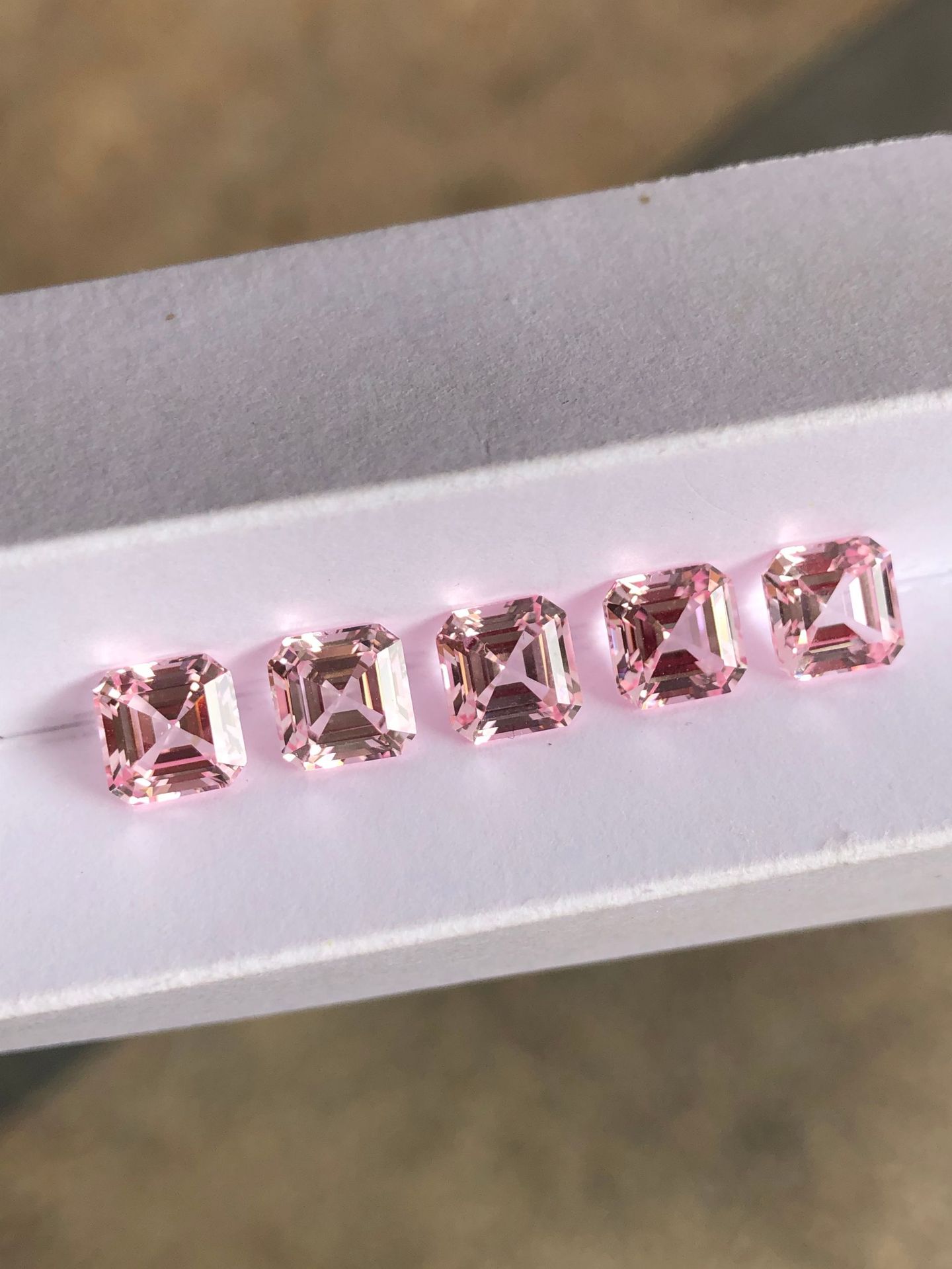
When shopping for a lab grown diamond, buyers often encounter the same four quality factors used to describe natural diamonds: cut, color, clarity, and carat weight. Together, these characteristics are commonly known as the 4Cs of diamond grading.
But how does lab grown diamond 4C grading actually work?
Although lab grown diamonds are produced in controlled laboratory environments rather than formed naturally underground, they are still diamonds. They are evaluated using the same fundamental 4C framework used to describe diamond quality. However, understanding the grading process requires looking beyond the four letters themselves.
A lab grown diamond with excellent color and high clarity is not automatically the best choice. Cut quality, proportions, visual performance, dimensions, fluorescence, inclusions, and the grading report can all influence how the stone looks and performs in jewelry.
This guide explains how lab grown diamond 4C grading works, what each category means, and how buyers can use the information when selecting a stone.
The 4Cs are:
Cut
Color
Clarity
Carat weight
These four characteristics help organize the most important aspects of diamond quality.
It is important to understand that the 4Cs do not represent one overall universal quality score. Instead, they describe different characteristics of the diamond.
For example, a diamond can have:
Excellent color but mediocre cut
High clarity but weak proportions
Large carat weight but poor visual performance
Excellent cut and color but lower clarity
This is why lab grown diamond grading should be considered as a combination of characteristics rather than a single number.
The basic 4C terminology is used for both lab grown and natural diamonds.
A lab grown diamond can receive grades for:
Color
Clarity
Cut
Carat weight
However, a grading report should also clearly identify the diamond as laboratory-grown.
This distinction is important because a lab grown diamond and a natural diamond may have similar 4C grades while having very different market values and origins.
When buying a lab grown diamond, buyers should therefore check both the 4C information and the laboratory-grown identification on the grading report.
Cut is one of the most important aspects of diamond appearance.
Many people mistakenly think that diamond cut means the shape of the stone. In grading terminology, these are different concepts.
Shape refers to the outline, such as:
Round
Oval
Cushion
Pear
Princess
Emerald
Marquise
Radiant
Asscher
Cut refers to how the diamond's facets, proportions, symmetry, and finish interact with light.
For round brilliant diamonds, cut grading is particularly important because the proportions and facet arrangement strongly influence brilliance and fire.
A well-cut diamond can return substantial light to the viewer, creating a bright and lively appearance.
Depending on the grading laboratory and report, a high cut grade generally indicates favorable characteristics related to proportions, symmetry, polish, and light performance.
Buyers should remember that grading terminology can vary depending on the laboratory and diamond shape.
For example, a cut grade commonly associated with round brilliant diamonds may not be directly comparable to how fancy-shaped diamonds are evaluated.
A diamond with a high carat weight is not necessarily visually impressive if its proportions are poorly balanced.
Cut quality can influence:
Brilliance
Fire
Scintillation
Face-up appearance
Visual balance
Apparent size
For many buyers, a well-cut lab grown diamond with slightly lower clarity or color can look more attractive than a poorly cut diamond with higher grades in other categories.
Diamond color grading evaluates how much body color a diamond displays.
For traditional white-to-near-colorless diamonds, grading commonly uses a scale that progresses from D through Z.
D represents the highest colorless range.
E and F are also considered colorless.
G through J are generally described within the near-colorless range.
Lower grades show progressively more visible warmth.
The exact appearance can vary depending on the diamond, lighting, cut, and setting.
Not necessarily.
A D-color diamond may offer the highest level of colorlessness within the standard scale, but that does not automatically make it the best value for every buyer.
Many near-colorless lab grown diamonds can appear very white when viewed in jewelry, particularly when they have strong cut quality.
For buyers working within a budget, comparing D, E, F, G, and near-colorless lab grown diamonds can reveal opportunities to allocate more of the budget toward cut or size.
Yes.
Some diamond shapes can show color more readily than others.
Longer or larger step-cut designs, such as emerald cuts, can sometimes make body color more noticeable because of their broad, open facets.
Round brilliant diamonds often hide subtle color differences particularly well when they have strong cut quality.
Therefore, the ideal color grade can depend on both personal preference and diamond shape.
Clarity describes the presence of internal characteristics called inclusions and surface characteristics called blemishes.
A clarity grade considers factors such as:
Size
Number
Position
Nature
Relief
Visibility of characteristics
The standard clarity scale ranges from extremely high clarity to diamonds with more obvious inclusions.
Common categories include:
FL — Flawless
IF — Internally Flawless
VVS1 and VVS2 — Very, Very Slightly Included
VS1 and VS2 — Very Slightly Included
SI1 and SI2 — Slightly Included
I1, I2, and I3 — Included
The precise grading terminology and criteria should always be confirmed from the individual grading report.
Not necessarily.
The practical question for many jewelry buyers is whether inclusions are visible to the naked eye.
A diamond graded VS1 may look virtually identical to a higher-clarity diamond once it is mounted, even though the higher-clarity stone may command a higher price.
This creates an important distinction between laboratory grading quality and visible beauty.
For buyers seeking value, an eye-clean lab grown diamond can often be more practical than paying a significant premium for microscopic clarity differences that are difficult to see without magnification.
Lab grown diamonds may contain characteristics associated with their growth environment.
Depending on the growth method and individual stone, a grading report may identify different types of inclusions or internal features.
This is another reason to examine the actual grading report rather than relying solely on a broad clarity label.
Two diamonds with the same clarity grade may have very different inclusion patterns.
One may have a small inclusion in a less noticeable location, while another may have a characteristic closer to the center or near the surface.
The grade provides useful information, but the individual diamond still matters.
Carat is a measurement of weight, not visual size.
One carat equals 200 milligrams, or 0.2 grams.
A diamond's carat weight is measured precisely and recorded on its grading documentation.
However, two diamonds with the same carat weight can look noticeably different in size because of differences in:
Shape
Cut proportions
Depth
Table size
Girdle
Faceting
Overall dimensions
For this reason, buyers should consider millimeter measurements alongside carat weight.
Suppose two round lab grown diamonds both weigh 1.00 carat.
One may have proportions that create a slightly larger face-up appearance, while another may carry more of its weight in depth.
Both can legitimately weigh the same amount.
This is why lab grown diamond carat weight and size should not be treated as interchangeable terms.
When comparing diamonds online, look at the stated length, width, and depth measurements in addition to the carat weight.
The most important lesson about lab grown diamond 4C grading is that the categories should not be evaluated independently.
Consider two hypothetical diamonds:
| Characteristic | Diamond A | Diamond B |
|---|---|---|
| Cut | Excellent | Very Good |
| Color | G | D |
| Clarity | VS2 | VVS2 |
| Carat | 1.00 ct | 1.00 ct |
Diamond B has higher color and clarity grades, but Diamond A may still appear more brilliant if its cut performs better.
This illustrates why the highest grade in every category is not always necessary to achieve the best visual result.
A better approach is to identify which characteristics are most important for your priorities and budget.
There is no universal answer, but cut is often one of the most important factors for visual appearance, particularly for round brilliant diamonds.
A practical priority order for many buyers might be:
Cut and overall optical performance
Color appropriate for the chosen setting and shape
Clarity sufficient for an eye-clean appearance
Carat weight based on preferred size and budget
However, individual priorities vary.
Someone who wants a very large center stone may prioritize carat weight. Another buyer may prefer exceptional color. Someone purchasing an emerald-cut diamond may pay closer attention to clarity because the step-cut facets can make inclusions easier to see.
A grading report provides much more useful information than the simple 4C grades.
Depending on the laboratory and report, buyers may find information such as:
Laboratory-grown identification
Carat weight
Color grade
Clarity grade
Cut grade where applicable
Measurements
Polish
Symmetry
Fluorescence
Proportions
Diamond plot or clarity characteristics
Inscription information
Before purchasing a lab grown diamond, compare the information on the report with the actual stone listing.
The report number and identifying details should correspond to the diamond being sold.
Not all diamond grading reports should automatically be treated as interchangeable.
Different laboratories can have differences in grading standards, terminology, documentation, and market recognition.
Buyers should research the issuing laboratory and understand what its report represents.
A grading report should be treated as an important reference document rather than the only factor in the purchase decision.
The physical appearance of the diamond, its proportions, and the seller's transparency also matter.
People commonly use the terms "certificate" and "grading report" interchangeably, although a diamond grading report is more accurately understood as an assessment of the stone's characteristics.
For a significant purchase, obtaining an independent grading report from a recognized gemological laboratory can provide useful verification of the diamond's reported 4Cs and laboratory-grown status.
Buyers should also make sure the report corresponds to the exact diamond being purchased.
One of the most important points in lab grown diamond grading is that not every shape is evaluated in exactly the same way.
Round brilliant diamonds commonly receive a formal cut grade from major grading laboratories.
Fancy shapes such as:
Oval
Pear
Cushion
Radiant
Emerald
Marquise
Asscher
may require more visual and proportion-based evaluation.
For these shapes, buyers should pay attention to:
Symmetry
Length-to-width ratio
Depth
Table
Faceting
Bow-tie effect where applicable
Light return
Outline shape
Windowing
Polish
A grading report remains useful, but visual assessment becomes particularly important for fancy-shaped lab grown diamonds.
One advantage of understanding the 4Cs is that buyers can decide where to spend their budget.
For example, instead of automatically choosing the highest available clarity, you might choose a lower but eye-clean clarity grade and put the savings toward:
A larger diamond
Better cut quality
Higher color
A more elaborate setting
The goal is not necessarily to maximize every grade.
The goal is to create the combination of size, beauty, quality, and value that best fits your priorities.
A large diamond is not automatically a beautiful diamond.
Always consider cut, proportions, color, clarity, and dimensions together.
Many inclusions are difficult or impossible to see without magnification.
Consider whether a stone is eye-clean before paying a large premium for a higher clarity grade.
White metals may make subtle warmth more noticeable, while yellow or rose gold can make slightly warmer diamonds visually harmonious with the setting.
Two diamonds with identical carat weights can have different face-up dimensions.
Always compare millimeter measurements.
The 4Cs describe different characteristics. There is no single combination that is automatically ideal for every buyer.
A grading report is important, but photographs, videos, proportions, fluorescence, symmetry, polish, and seller transparency should also be considered.
Before purchasing, consider the following:
Cut
Is the cut grade appropriate for the shape?
Are the proportions well balanced?
Does the diamond show strong brilliance?
Is the symmetry good?
Color
Is the diamond within your preferred color range?
Does the color work with your chosen metal?
Is paying for a higher color grade worthwhile for your eyes?
Clarity
Is the diamond eye-clean?
Where are the inclusions located?
Are any characteristics surface-reaching or otherwise concerning?
Carat
Does the carat weight match your preferred size?
What are the actual length and width measurements?
Does the diamond face up large for its weight?
Report
Is the diamond clearly identified as lab grown?
Does the report correspond to the stone?
What laboratory issued the report?
Are polish, symmetry, fluorescence, and measurements provided?
Understanding how lab grown diamond 4C grading works makes it easier to compare stones without becoming overwhelmed by numbers and grades.
The four primary categories—cut, color, clarity, and carat weight—describe different aspects of diamond quality. Cut influences how the stone interacts with light, color describes body color, clarity evaluates internal and surface characteristics, and carat measures weight.
However, the best lab grown diamond is not necessarily the one with the highest grade in every category.
For many buyers, a well-cut, eye-clean, appropriately colored diamond with attractive proportions can offer an excellent balance of beauty and value. By reviewing the grading report, examining the actual diamond, comparing measurements, and considering how the stone will be worn, buyers can make a more informed decision.
Ultimately, the 4Cs are a starting point—not the entire story. The most successful purchase is one where the grading information, visual appearance, personal preferences, and budget all work together.









